The Thread on Her Head

vsvcr2s
Wayne Michael DeHart  (May, 2018)

May 8, 2016.

At a lively gathering of seventeen of her friends, Emma acknowledged their best wishes on her birthday with a proud announcement: “Yes, at 75, I am finally officially ‘old’ and pretty certain I’m still a woman. But I am NOT an old woman – and I’ll thrash the bejeezus out of any one of ya who says I am.” She winked and smiled, then sat her old ass down.

May 8, 2016, was also Mother’s Day.

Emma was not a mother. In fact, she had rarely been in any kind of relationship, much less one where the word “love” or “marriage” earned even a consideration. Some things are just not meant to be, she had reasoned, and for much of her life and for far too long had accepted her solitude with a quiet grace and dignity.

Many, if not most, of those present, however, were mothers and grandmothers. They had other places to be, other places their presence was desired and expected on this sunny Spring afternoon. All agreed beforehand that for them there would be other Mother’s Days and other opportunities to accommodate their loved ones.

Each knew that for Emma there would be no more birthdays, and those aforementioned loved ones would indeed understand their choice that day.

___________________________________________

When Emma turned 60, she retired from her long-held clerk’s position at a New Jersey manufacturing facility. She sold her small, modest home and moved, alone, to Florida, and purchased an equally small and modest manufactured home in a senior retirement community. Quiet, and not very social, she fully expected to be immediately cast in the traditional lonely spinster role by her new neighbors, a role she would find neither uncomfortable nor unsettling.

An introvert, she valued her privacy and lack of obligation to “join in” and draw unsolicited and unwanted attention to herself, while at the same time desiring the idyllic safety and serenity offered by such a community. No more snow and ice; much more sunshine and warmth, with green grass and colorful flowers in every direction. No more office schedule, gripes and gossip; much more free time and peace of mind.

And so it was – but for just a few short months.

Then came the anguish and ashes, the fatalities and futility, of September 11, 2001.

For Emma, who had been enjoying the tranquility that she was looking for, and who had become casually acquainted (“Good morning, I’m fine and you? Wonderful, have a great day, etc.”) with a few of her neighbors in “the park”, the sudden tragedy hit her like the proverbial ton of bricks. She felt immeasurably lonely, sickened and defeated by the events of the day and those that immediately followed. For the first time ever, she wished she had a husband, a lover, a son, a daughter, or an actual friend to help alleviate the fear, the darkness, the loneliness and the pain in her hurting heart.

For weeks, she grieved alone inside her home, sustained by canned goods and frozen foods, going only to her mailbox, then retreating quickly back inside. Inevitably, some neighbors took note. One of them, a woman of about her age who also lived alone, became the first to tap on her door. At first, Emma fled to her bedroom to “wait it out”, but the concerned visitor only knocked louder and more aggressively, calling out her name. (She actually was saying “Irma”, not having been formally introduced to this new person, and thus relying on neighborhood chatter for the scoop on the soup, as it was called.) Emma soon felt guilty about ignoring the clearly-alarmed and persistent woman and also realized an embarrassing 911 welfare check could result if she remained unresponsive.

She went to the door, opened it, and said, “EMMA. E-M-M-A, Emma, not Irma.”

The two women looked each other in the eye. To the surprise of both, each started smiling, then laughing out loud, almost in rhythm. Neither knew that for Emma, and for those yet to come into her life, it would prove to be a life-changing, transformational moment in time.

As the country slowly regained its footing from the events in New York City, at the Pentagon and across that barren Pennsylvania field, a sense of normalcy returned to her Central Florida mobile home community and the nearby cities and towns. With it emerged a “new” Emma, a woman who came to realize that people DID matter, and that she had deprived herself of a lifetime of the rewards derived from sharing with, and caring about, others. She had always been a good person, a nice person, mind you. Never rude or unfriendly, never deliberately offsetting. Just one of those folks who kept to herself, who celebrated the good and suffered the bad in solitude and silence, friendly but not a friend, cordial but not a confidante, alert but not aware.

Out of a national disaster came a personal rebirth, a steadily-evolving process of socialization into a sense of completing oneself. Emma now wanted every day to count, to matter, to afford opportunity and for that opportunity to be breathed in, held, remembered, then exhaled to make room for the next one, and then the next. The aforementioned neighbor, Regina, had told everyone about her encounter with Emma, asserting that “the newbie is a cool old chick after all.” Soon, everyone greeted her with “IRMA !!” when they saw her (yep, like “NORM” in Cheers), and she absolutely delighted in it. This must be that warm, fuzzy feeling she had heard about all of her life. She liked it, and the neighbors liked her.

______________________________

It was now early 2006, and Emma/Irma was an active, outgoing, popular, funny (!) and much-valued member of the park community. She wasted neither time nor energy bemoaning those many lost years of simply existing, alone, in a corner or in the shadows. Instead, she was grateful for every new adventurous day in this unforeseen gift of a second chance at a purposeful and meaningful life.

A couple of the women in the park had read about a unique social group of older women named the “Red Hat Ladies” (“Red Hatters”) who belonged to the “Red Hat Society”, a movement that originated with a few over-50 California women flipping their middle digits at the perceived norms of the golden years. They envisioned a long, slow exit filled with fanciful, zany, off-the-wall and devil-may-care adventures. Their signature adornments were red hats (the wilder, the better) and purple garb (still even wilder, still even better).

They sought kindred spirits, near and far. The movement was rooted in friendships and when the train came by, Emma got instantly on board. In fact, she became both the engineer and the conductor for the local chapter.

The aura of Irma had invaded the heart, soul, body and mind of Emma, awakening and energizing each element swiftly and cleanly, spiriting her away from the Long Ago and into the Here and Now. The wise woman understood why the cards said she had to be Emma first in order to become Irma and thus rejected any regret over the lost years.

On the day Emma went shopping for the second time for a brand new oversized and overwhelming red chapeau, she went alone, by design. She had seen many sizes and styles on the internet (“I like this internet thing.” she had commented to Regina a month after the latter had introduced her to the concept of actually having a PC of her own. “It’s like finding Hershey kisses in your bed when you wake up in the morning.”). She knew what she wanted – something large and unadorned, so that she could have words embroidered onto it, rather than go the decorative trimmings route of several fellow red riders.

She found exactly what she wanted, then headed to a tiny storefront stitchery in the next town over. One of the ladies in the park excelled in such work, but ol’ Emma didn’t want to show her cards before the bi-monthly Saturday night Red Hat gathering at the clubhouse. She wrote down the words and described the placement she wanted, painstakingly picked out thread colors, told the wide-eyed young seamstress to “do it to it”, then went to Wendy’s for a burger and a Frosty. Just killin’ time, chillin’ out, bein’ Irma. She returned to the shop two hours later, belly full and anticipation high.

The embroidery work was done. The threads proved to be exactly the right colors, jumping out boldly against the scarlet felt of the wide-brimmed hat. Emma, now just a month shy of her once-dreaded Medicare birthday, was beyond excited – “I feel and act like a kid, too bad I don’t look like one”, she needled herself.

When Saturday evening arrived, Emma put on a purple-striped top and purple-trimmed shorts and practically double-timed to the clubhouse with her hat in a bag. Just a freewheelin’ kid bouncing down the street, anxious to see everyone and share her new treasure.

“The Cat’s in the Hat. The Hat’s in the Bag. Da-da, dee-dee, they’ll look at me.” She sometimes fretted that she had become almost too happy and definitely too silly. Nevertheless, her presence and companionship were always welcomed and no one had ever discouraged or disparaged her lightheartedness. She made people smile, but mostly she wanted to make everyone laugh – men, women, children, puppies and kittens alike.

No one could remember the recluse that had moved into the blue-trimmed home at the bend in the street five years earlier.

Good, she mused, because I don’t remember her either.

This was probably the fifth or sixth time the Red Hat ladies had gotten together to hang out and eat and tell stories and experience the camaraderie of the night. Emma had worn the same bland burgundy hat at each of the previous get-togethers, though several of the ladies had already debuted multiple selections in a wide range of rich and ravishing reds . She had not let on that she would have a new look for this go-around, so naturally when Emma arrived (a tad fashionably late, she admitted to herself), everyone turned to look as she noisily shook her purse upon stepping inside.

“YOU FORGOT YOUR HAT!!”

“No. No, I didn’t.” And up came the bag.

For some oblique reason, she first counted the other women present. Seventeen. Dang. She was hoping for more for the unveiling. Still, enough to determine success or failure.

She moved to the front of the room, once again thoroughly enjoying being the center of attention after so many years of passing through life unnoticed wherever she went. Still, Emma had not become diva-esque, despite her popularity. She sincerely appreciated the friendships and the positive qualities of each of the women she had come to know. Some of them she even trusted with her secrets, though none of the latter proved to be scandalous or “spicy” (to their dismay).

With curious eyes all around, she felt like Shirley MacLaine’s mischievous Irma La Douce rather than Irma La Elder, enticingly turning her back and making a swift bag-to-head movement with one hand while bent forward and holding a small mirror in her other hand. To her pleasant surprise (not really, she had practiced the move about 83 times before leaving home), the hat sat right where it was supposed to without any adjustments.

Still bent over with her back turned, the peanut gallery rolled into high gear – “Whatcha doing down there, looking for a man?” came from the left, and “Hey, the sandwiches are getting stale, Irma” from the right. For the briefest of moments, Emma worried that she was about to lay an egg, and not a golden one.

Up she came, whirring around like a ballerina into a shaky releve’ fifth position, arms outstretched and moving from high to low at her sides, punctuated with a weak and hesitant “TA-DA”!

Silence.

More silence as everyone moved closer.

Then … laughter, and lots of it, followed this time by a bolder and much more triumphant “TA-DA” from the relieved star of the night.

It had taken a few moments for them to read the words embroidered across the wide front of her so-red and so-floppy hat.

In bright, neon green: “If ya think I’m gorgeous …”

Underneath, in bold yellow/gold: “LAUGH !”.

For an-almost 65 year-old woman, who had always seen and described herself as the ultimate “Plain Jane” (no offense, Jane, if you’re reading this), it was a 3-pointer from 30 feet away from the basket, hitting nothing but net.

It was a grand slam with two outs in the bottom of the ninth inning when trailing by 3 runs.

It was a triple chocolate five-layer cake with an extreme amount of frosting.

It was finding the only seat in the theater with no one on either side at curtain time.

It was outstanding.

It was geriatric genius.

It was, in a word, perfect.

______________________________________

Years passed. The park’s Red Hat Ladies expanded their activities into the local communities, gaining a whimsical notoriety and becoming the envy of their sister groups in the area.

From that night forward, though Emma had to replace the hat a few times due to wear and fading, nothing else about it had changed. The very specific color, the words, the beaming face underneath it, all became etched in the memories of those who delighted in her sense of humor.

As she grew older, the significance of the words grew as well. She had chosen “gorgeous” for a very specific reason. If the word had been “beautiful” or “pretty”, she reasoned, someone might easily miss the point. A smile would be far more likely than a laugh. One could say, “yes, she is beautiful in spirit”, or “beautiful for her age” or “she does have a pretty smile”. Specific to physical appearance, the word “gorgeous” offers no such escape route. She wanted to make them laugh, not simply smile. Thus the outlandish sight of “gorgeous” on the hat of Emma, proudly out in front of her group, always set the tone and the mood. The Red Hat Ladies were there to have fun, to encourage others to have fun, and to give an emphatic thumbs-down to the very idea of growing old gracefully.

And so they did.

Emma didn’t care whether folks laughed WITH her or AT her. As long as they laughed for a moment and forgot their own troubles and turbulence, she was cool with that. The best part, both for her and for them, is that either way no one had to suppress laughter upon reading the hat, no matter which way they were assessing it. No one else knew, or would know, why the next person laughed.

It gave both the mean-spirited and the elitist cover for their patronizing guttural guffaws. For everyone else, it was a reminder that, as Reader’s Digest told us for generations, “laughter (truly) is the best medicine.”

______________________________

At age 70, on the tenth anniversary of that ill-fated day, Emma finally revealed to Regina that a chance reminder of those 2001 hate-driven events had been the catalyst for that very first “message” hat. Five years earlier, stopped in traffic while out hat-shopping in her Chevy Cavalier, a faded “Remember 9/11” bumper sticker caught her eye and stared back at her, creating an instant juxtaposition of hat and hate in her head. Point made and noted, Emma abruptly shook off the intrusion and drove on home, but resolved in some small way to employ the former to offset the latter.

That night, she sat on her bed and closed her eyes and tried to visualize a “happy hat”. She came up empty until Rod Stewart’s inimitable voice reverberated across the room, ricocheting off the walls, courtesy of her beloved Bose Wave radio. Though she had indeed become quite the social sally by that time, she only shook her ageless booty in the privacy of her home. Off the bed she bounced, dancing and singing/mumbling along to “Da (Do) Ya Think I’m Sexy?”, air mic in hand. (Cool old chick indeed – Regina had nailed it right out of the gate!)

There it was – the awaited lightning bolt. Hearing herself singing the only words she really knew, the title itself, cracked her up. “Me sexy?” It made her laugh out loud. Emma quickly searched her vocabulary for a more appropriate word than “sexy” that would produce the same surprise and yield the same laughter. Thus was born “If ya think I’m gorgeous…” She plotted out the words and crudely sketched the hat on her phone pad. “Yesssss.” Seventeen days later she found just the right hat, visited the stitchery, chewed her burger and chugged her Frosty.

After that disclosure, she asked her friend if she believed that malicious hatred and heartfelt laughter could truly co-exist within someone at a moment in time. Regina first looked away, then down, and said, “Sadly, my dear, I very much think they can, and that it’s actually quite common.” To which Emma replied, with that impish wrinkle-laden grin, “Do you really think anyone, while laughing at the words on my hat, the thread on my head, at THAT moment in time, can simultaneously have thoughts of hate?”

Regina shrugged and tilted her head. “I guess not, short-lived as a moment is. So you win, Irma. You win.” She then gave an acquiescent nod and got up to hug her friend before heading home to a book and a beer. Emma at first just smiled after the door closed. Then she giggled. Soon she was howling with laughter in her kitchen.

“We won!” Emma and Irma had made their point together … as one. “WE, one!”

______________________________

Shortly after Labor Day weekend of 2015, Emma came home from her visit to the doctor. She sat down on the concrete steps and stared into the distance. Emma wanted to cry and for Regina, or any of her neighbors, to see her and come over, but no one did.

The tears never came. Not that day or any day thereafter. They had all been shed before she moved south. No one ever saw her cry in New Jersey, but cry she did. More than anyone should. And now, she wanted to, but couldn’t. “Didn’t win today, did ya”, she muttered.

Gut-punched, the woman rose from the stoop and went inside, into her bedroom, and retrieved the hat from the closet shelf. She pulled it down tight onto her head, and at 74 years and 4 months young, pulled off a faultless pirouette, held it, looked into the mirror, and said aloud, “Gorgeous you are, kid, TA-DA!”

And since she couldn’t cry, she did what everyone else did when they beheld that sight – she laughed.

In time, almost everyone in the park became aware that her cancer would soon be the victor in the war that consumed her from within. Nevertheless,  Emma and Irma combined to fight and win many battles in the months that followed. “They” did not give in easily, as Emma would have done fifteen years earlier, choosing instead to turn up the music, mute the pain and not just endure, but persevere.

Emma wore the signature red hat to that 75th birthday gathering on May 8, 2016, and yes, everyone laughed one more time, just as she had hoped. Weak though she was, she went full-blown theatrical, making the most of that final spotlight, that sacred moment in time. Before toasting her best friend, Regina joked, “Enough already, Irma, you ham, now sit your old ass down”. That’s when a frail but still saucy Emma spoke her own sassy words, saluted her Friend and thanked her friends, and ended with a feigned Scarlett O’Hara swoon down onto the chair.

__________________________________________

Thirty-three days later, on June 10, Emma passed quietly in hospice, deep in the night.

Her red hat, which Regina had lovingly placed by her side when she first lapsed into involuntary silence and stillness, caught the eye of each staff member that looked in on her through those final days and hours. It never went unnoticed and it never was moved, much less touched, as they tended to her unspoken needs.

When the night nurse made her last rounds, Emma was lifeless.

Her face was locked in a smile.

The hat was on her head.

“TA-DA” , indeed.

The nurse looked around the room, turned back to the sight before her, froze the moment in time, and then laughed out loud.

Emma would have been pleased; mission accomplished, one last time.

                                                                    #

W0135-RED_l (5)

A Kiss at Fifteen

vsvcr2s
Wayne Michael DeHart    (July, 1996)

Nancy was her name. Not a good omen. His eighth-grade girlfriend had been a Nancy and she had broken his heart, her head turned by the quintessential older man – a 16-year-old with his own car.

Now 16 himself (though without a car), he knew instinctively this Nancy was different. She was a younger woman (15) from the poorest of families and lived in “that” neighborhood. It seemed like she had just a few outfits for school, including a couple of ill-fitting blouses and faded, dark-colored skirts often adorned with lint and loose threads.

Few other kids associated with her and none laid claim to her friendship – or wanted to. She often dawdled idly after the last bell and consequently missed her school bus home, thus having to walk the couple of miles to the outskirts of town in solitude. She was never seen at school events, and was never missed.

He had seen her around school and wondered why she was always alone, appearing melancholy and deep in thought. The factory town had its share of underprivileged kids, many of whom hung together and shared the dual struggles of schoolwork and trying to fit in. Among the loners, however, none traveled as much in a world of their own as this enigmatic girl with the striking black hair and upturned nose.

He found her enchanting, though he could not say just why, and he became intrigued by her detached air of quiet defiance and self-reliance. He wanted to approach her, to talk to her, maybe sit with her at lunch or something. When he mentioned his interest to his friends, he became the target of biting verbal barbs and jabs, the kind of banter that male juveniles deem requisite when responding to confessed revelations of sincerity and sentiment.

They made one point clear and unmistakable: Stay away. “Everyone” knew this girl was always alone for a reason – she was, in the jargon of the day,  a “skag” – a catchall, undefined term that simply meant she was deemed undesirable, unattractive, unacceptable, unsociable and unfit to be seen with. They said he could do better than, well, a skag.

 Skag – Not to the manor born. Earthy. Plain. Mumbled, mostly. Standoffish. Doesn’t fit in, won’t fit in, can’t fit in.  Odd. Quirky. Rumored  to be reckless, dangerous, dishonest and dark. Outright liar? Probably. Not too swift, not too bright. A vacant stare. Unsmiling. Rough around the edges. Doesn’t read, won’t read or can’t read. Loner. Lonely. A mutt. Can’t be trusted. Bad family? Likely. Not a “nice” girl, to be sure. Was supposedly seen late one night with the leather-jacketed, dropout guys behind the dairy bar, though maybe it was just someone who kind of resembled her in the shadows. Didn’t matter.  A mindless monster, a heartless harlot, a soulless slut, a trashy tramp, i.e., a minx to the max.)

Skag – also a scattershot term for a girl he had become smitten with from afar.  Well, skag or not, whatever it meant, he had grown weary of  listening to his friends’ warnings, and became more determined than ever to get to know her.

And get to know her he did. He had expected aloofness but discovered a warm acceptance. Right from the start, she dropped her guard and removed her mask, captivating him with her childlike innocence, her unpretentious charm, her rich sense of humor and her dazzling dark eyes.

He himself was mature beyond his years yet he knew he remained a step or two behind her.  She was strong from a lifetime of being shunned and teased and had protected herself with an ass-kicking air of independence that she compromised when they would talk for hours on their long walks home together. (She now missed the bus on purpose, knowing he would walk her home each day, carrying her books, always walking between her and the street as he had been taught, protecting her from errant traffic  – a noble, yet subtle, display of gallantry that did not go unnoticed.)

As the weeks went by, the young couple achieved a delicate balance of friendship, trust and physical attraction – a balance nurtured by a mutual respect that was rare for those of so few years.

He had recently read “The Once and Future King” for a book report, his selection inspired by a pleasant memory of seeing “Camelot” at the movies the year before. He had been captured by the spirited simplicity of Richard Harris’ fervent King Arthur and the seductive strains of Vanessa Redgrave’s alluring songs. He had cursed the intrusion of Lancelot, the betrayal of Guinevere and the naivete’ of Arthur as the king’s  dream and vision unraveled before his eyes. For some vague reason, he took it personally and thereafter preferred to remember only the first half of the story and abandon the rest.

In quiet moments of solitude, he would envision the town as his Kingdom, the mysterious Nancy as his Queen, and every other guy in the school as lurking Lancelots. He wanted the “happily ever after” ending from the title song.  It was a great dream and he rode it hard. His years were few and imagination serves none so proudly as the young.

Despite many opportunities, he had not once acted on his impulsive desires to kiss the girl, perhaps out of fear that bells wouldn’t ring, that sparks wouldn’t fly, that the earth wouldn’t move. For him, or for her, or for both. He understood that, in one brief, unshining moment, the magic of his Camelot could be reduced to the sordid sorcery of Oz.

Sorcery? Nancy knew little, perhaps nothing,  of Camelot, but surely would have rejected his imagery of the Land of Oz. To her, it was a wonderful place of endearing munchkins, yellow brick roads and the glittering splendor of the Emerald City. Home to Glinda the Good and wishes granted and happy endings. Though she had seen the classic movie, she had not read the books and was not aware of the blissful absence of poverty and ignorance and sickness and sadness in Baum’s evolving Oz.

The unassuming young girl was content to imagine herself as Dorothy, with true friends and real happiness – hailed as heroine by the masses, simple folk like herself. Simply put, when she was Dorothy, she was not Nancy. But it was Nancy that had captured the boy’s heart. And it was Nancy that had to deal with life’s uncertainties and burdens.

Acceptance, for example.

Football games at their high school were as much social events as athletic contests. Until the cold weather of November arrived in New Hampshire, most were played on Friday nights. With their team a perennial also-ran, students spent more time socializing and couple-watching on those most significant of date nights. It was still early in the school year, and new “pairings” were great gossip material for the following week.

It was Friday, October 15, 1965 – three days after traditional Columbus Day – and discovery still lingered in the early evening air. Right before kick-off came one of those moments that are forever etched into the memories of those present, there to be summoned forth from time to time to restore that balancing force in our lives called perspective.

Nancy had reluctantly agreed to go the game with him, their “coming out” as a couple and her first ever school function. She liked him, and wondered aloud if they should have just gone to a movie, where he would not get teased for being with her. He told her not to worry, that he could brush aside whatever might be said to him, and that no one would bother her. She felt reassured and off they went.

They had been seen together almost daily in the cafeteria and sometimes on those long after-school walks to her house, but few really thought she was anything more than a curiosity to him. And certainly he would never actually take her out, like on a date or something. But look !

There they stood, hand-in-hand, looking up into the stands for the least congested section of the bleachers, hoping to go unnoticed and subtly get to a seat while everyone was focused on the players emerging onto the field from each sideline. Then came the shout, cold and cruel, reverberating above the murmur of the crowd.

“SKAG!”

The word had no sooner pierced the heart of the young girl when it was followed by more shouts, more voices, in unison – “skag, skag, skag”. These were his “friends,” and he hurt for her.

That resilient strength, that cloak of armor she had relied upon to keep her safe from hate and hurt and humiliation wavered in the October wind as everything went quiet and it felt like everyone there was staring at them, and not the field.

She turned to him, tears welling in those dark eyes that owned his soul, and he squeezed her hand tight. He froze, sure she was going to break free and run, the now-ended shouts still echoing loudly in her head, ripping through her like buckshot, her spirit bleeding in retreat.

He was wrong.

Ass-kicking independence dies hard in the young as well as the old. She pulled him close and fought off the tears. In a defining moment of courage and character, of determination and defiance, she turned and smiled in the direction of her tormentors. Then she pulled him in even closer and kissed him. It was showtime and he responded like she knew he would. It was a kaleidoscope kiss of blues and golds, of sparks and  starbursts. Each felt the pounding of the other’s heart and savored the sweetness and innocence of first love.

At first surprised, than seemingly delighted, many of those watching broke into spontaneous applause, then turned their attention back to the field, to the players, to the cold October wind that defined Autumn chill in New Hampshire.

The football team did win the game, but theirs was not the most important victory that night. It was the conquest of a love that proved at once sacred and spiritual – a love that was romantic yet believable, worldly yet virtuous , misunderstood but deserved. A love that was real and yet mythical, capturing all that was good in Camelot and Oz. It matters not that those fabled realms were flawed; only that their imagination, their inspiration, their vision and their promise are perpetuated and preserved.

By those who teach, for those who learn.
By those who lead, for those who follow.
By you and me, for those who listen.

For his King Arthur.
For her Dorothy.
For youth.
For love.
For … ever.

#

000268159_113825558707441_8196960_n

DSCN0155 (2)

The real Nancy – at 15. Hope your life has been all that you wanted it to be, and more. Thank you for The Kiss, and the memories. The Patrick Swayze line, “Nobody puts Baby in a corner,” could have been written about you. You wowed me to the stars, you were sweet yet strong, and you won the night.

“And Here’s to the Dawn of their Days” … Sweet Sir Galahad, joan baez, 1969

vsvcr2s

– Wayne Michael DeHart

With me, every step, every day, every night  . . .

rsz_daybreak-baez-nam


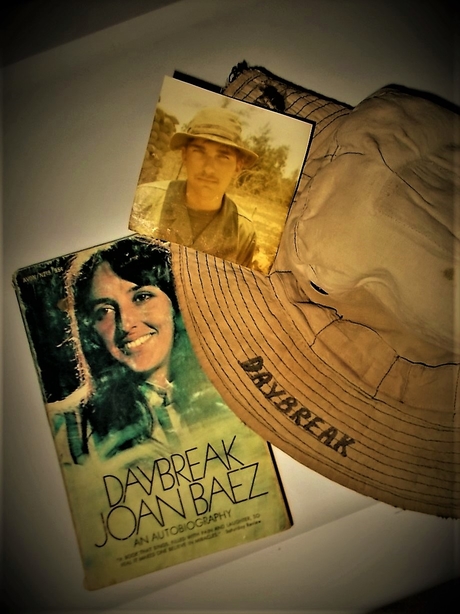
You did not dedicate this book to the likes of me.

Nevertheless, it guided my path, made me strong, brought me home.

Already familiar with its contents from the hardcover copy I had at home, I picked up an abused paperback copy from  a “freebie bin” at  Oakland Army Base while being processed for my assignment to what I would soon know as just, “The Nam.” I read it on the plane ride over, and I read it again on the plane ride back. The former with apprehension, the latter with gratitude. Sometimes in our journey, we bless the unintended. As you did for me. I do believe Mimi ¹ would have smiled at that, all these years later. The law of unintended consequences is a coin toss. I called “heads”, and you flipped the coin. Neither of us saw how it landed, nor did we want to.

On page 148, in a two-sentence chapter entitled, “Fourteen Old Bums”: you wrote “In the balcony of Madison Square Garden in New York City fourteen old bums filled up a row at the circus. In the middle of the Hungarian balancing act, someone treated them all to ice creams.”

On page 191, the closing page, you offered, “Only you and I can help the sun rise each coming morning. If we don’t, it may drench itself out in sorrow . . . It’s up to you.”

Ice cream and sunrise. Daybreak and heartache. Faith and fear. 365 days.

A tip of that weathered hat and profound thanks to you, Ms. Baez – then, now and ’til the sunset of my days.

¹ Mimi Farina, sister of Joan Baez. Joan wrote “Sweet Sir Galahad” in 1969, the first song she ever authored without a co-writer, as a tribute to Mimi ‘s spirited activism, and as an observation of a progression from lost love to newfound love. She performed the song later that same year at Max Yasgur’s dairy farm in Bethel, NY – a/k/a “Woodstock.”

/|\

wayne soldier of the month 001

Joan singing “Sweet Sir Galahad” in 1969:
https://www.youtube.com/watch?v=IDHgJVJ0cZA

And again in 1969, at Woodstock:
https://www.youtube.com/watch?v=MoAMJf26ACM

-Judy Collins (L) Joan Baez, Joan’s sister  Mimi Farina (R)


The Bumper-to-Bumper Blues

vsvcr2s
Wayne Michael DeHart  (March, 1997)

Out of the office, into my car;
four miles from home, not very far.

At the turn of the key, the engine’s alive;
the clock lights up, it reads 5:05.
Into reverse, backing out of my space;
workday is done, getting out of this place.
Then into drive, and I’m on my way;
music is playing, it’s the 1st of May.
Now that it’s over,  I can finally relax;
I made it through, without getting the axe.
The sun is shining, and the sky is blue;
payday’s tomorrow, too good to be true.

Out of the parking lot, onto the street;
can’t wait to get there, can’t wait to eat.
Maybe a chili dog, and a bottle of brew;
a bag of chips, and a doughnut or two.
Not really healthy, but it is what I like;
and I’ll burn it off, with a ride on my bike.
(Soon to be home, in my own little heaven;
three miles to go, clock sits at 5:07.)
Maybe I’ll read, or write a long letter;
watch some TV, that might be better.
Perhaps solitaire, or lift a few weights;
or call up some ladies, and plead for some dates.

Work was a hassle, but now I’m released;
my nerves are relaxed, my panic has ceased.
Soon I’ll arrive, at my castle for one;
the suit will come off, the tie be undone.
(Car’s running smooth , oil pressure’s fine;
two miles to go, clock reads 5:09.)
On my way home, feeling elated;
glad that’s not me, with that tire deflated.
Poor guy is sweating, and looking so down;
I’ve been in his shoes, and I know that frown.
But today is today, and I’m sailing along;
the wind’s at my back, and nothing is wrong.

So good to be free, from the boss and his stare;
from the inbox that’s full, from the outbox that’s bare.
From the fax that screams, from the phone that shrieks;
from the desk that wobbles, from the chair that squeaks.
I’ll find another job, I vowed that today;
a perfect position, with much higher pay.
(My tires are hummin’, my engine’s a-revvin’;
just one mile to go, clock beams 5:11.)
Then reality strikes, and I daydream no more;
a new job’s unlikely, no change is in store.
So each time I leave, each time I arrive;
I remind myself, “well, it IS a short drive!”

Hey, why all those brake lights, appearing ahead;
so many, so quickly, so bright and so red?
They dazzle my eyes, they blind me so fast;
my senses are numb, my mind is aghast.
An accident maybe, or a stalled truck;
darn this route home, my life and my luck.
I almost made it, without a hitch or a glitch;
but now I’m stuck, and starting to twitch.
I’ll have to stay calm, blood pressure’s too high;
a mind trip to Europe, eyes closed I’ll just fly.
And I’ll pretend I’m in Paris or Rome;
curses to gridlock, when I’m so close to home.

#

64709073_10219604189117772_6548248409545900032_n

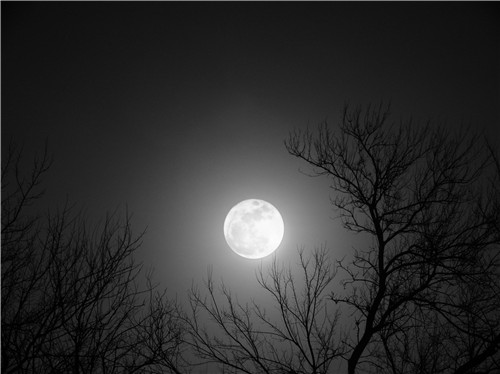
Eventide on the Granite Coast

vsvcr2s
Wayne Michael DeHart  (May, 1998) 

Settling onto the smooth surface of the rock nearest the edge,
I took my rest in the sheltering shadows of those who came before;
seeking answers in the splashing symphony of the Emergent Sea.

Northeast winds gathered and guided the sun-glistened swells,
adorning the vibrant waters with brilliant diamond sparkles
not unlike those that danced across her eyes at touching time.

The hours drifted as the gulls grew accustomed to my stillness
and coasted in to reclaim their roost and take a closer look
at the encroaching stranger staring vacantly into the distance.

The autumn afternoon faded gently into unwelcome twilight,
obscuring the horizon and enshrouding both vision and view.
The dusk lingered, intruding upon my thoughts and solitude.

The shoreline withdrew its welcome when sundown retired the day.
Disrupted and displaced, I rose to bid the Emergent Sea goodbye,
then tarried long; uncertain of my future, unsure of my return.

How striking was that first step back toward the weathered cottage
as my sudden turn revealed a moon immense and full, brilliant and swift
in its sudden ascent and capture of the silent star-struck sky.

Its luminous glow returned the diamonds to the surging sea.
They glittered softly upon the black surface behind the breakers;
undisturbed by the fury and the passion of the powerful tide.

The smothering darkness had surrendered to the lucent lamp
and resettled in places far away and unknown to me that night;
my only selfish concern being the illumination of the pathway.

When next we met I told her about the skylight and my awakening
midst gales and gulls and writhing whitecaps on the Emergent Sea.
It was a full and familiar moon that exposed her knowing smile.

As her words remained unspoken, my thoughts remained unbroken.
Then, in a musing moment, she asked why I had not seen it all before
in forty years of days and nights and suns and skies and seas.

I realized it was because my eyes had looked inward
each time I sought refuge on a soothing sunlit rock;
too secure in the daylight and too afraid of its passing
to reach out and grasp the grandeur of the sunset
and understand its place in the circle and cycle of my life.

Today, my eyes look outward, and upward, and afar.
Now, my vision is unveiled, my view is enlightened.
I transcend the darkness and embrace the essence of the night.
My heart pulses to the rhythmic tides of the Emergent Sea
and my spirit sings the silent song of the emerging moon.


Rocky-Coastline-of-Acadia (2)

eventide

A Day at the Dam – Summer, 2017, Franklin, New Hampshire

vsvcr2s
Wayne Michael DeHart

DSCN0091 (2)

Her: “It’s so beautiful here … and quiet.”
Him: “Yep.”
Her: “Whose car is this?”
Him: “It’s a Veloster, baby.”
Her: “Whose Veloster is this?”
Him: “It’s Ron’s.”
Her: “Who’s Ron?”
Him: “Ron’s gone, baby. Ron’s gone.”

Her: “He’s missing a great view.”
Him: “Yep.”

ed996ee9ebd6208e65631c29344e5ebf

“The day at the dam was nice, even though they didn’t have blueberry pancakes.”

With a nod to Quentin Tarantino’s “Pulp Fiction”, 1994

(Fabienne: “Whose motorcycle is this?”

Butch: “It’s a chopper, baby.”

Fabienne: “Whose chopper is this?”

Butch: “It’s Zed’s.”

Fabienne: “Who’s Zed?”

Butch: “Zed is dead, baby. Zed’s dead.”)


ired, I Said.

vsvcr2s
Wayne Michael DeHart   (May, 1997)

Fired he said, you’re fired he said,
so drop what you’re doing and clean out your desk
and be gone by noon without disturbing the others
with shallow goodbyes and stuff like that
because you’re f ired , he said.

Six years of coming in early and leaving late
and skipping lunch and busting my butt for him.
Six years of showing up when I was sick
and missing vacations and covering up for him.

Tired he said,  I’m tired he said,
of your wrinkled shirts and shabby suits
and shoddy shoes that don’t present
the proper image to our clients but no more
because I’m t ired , he said.

Six years of working at home at night
and neglecting my wife and kids for him.
Six years of waiting for a “reserved for” space
in the company parking lot for him.

Required he said,  it’s required he said,
that you turn in your name-tag along with your keys
and fill out some forms and aren’t those company pens
I see in your pocket so best hand them over
because it’s requ ired, he said.

Six years of concessions and wounded pride
and loss of self-esteem for him.
Six years of cheap motels and burger joints
to lower expense accounts for him.

Retired he said, Black’s retired he said,
without warning at mid-morning
to move to Scranton or some such place
and now the reports won’t get finished
because Black’s ret ired, he said.

Six years of torture in this terrible place
had greatly increased my disgust for him.
Six years of suffering in submissive silence
had nurtured a nagging contempt for him.

Expired he said, White’s expired he said,
dropped down to the floor at ten forty-four
clutching his chest and gasping for breath
without giving notice so we’re short one more
because White’s exp ired, he said.

Six years of timid yes-sirs and no-sirs
to display the proper respect for him.
Six years of flattering his unsightly spouse
so she’d always be in a good mood for him.

Re-hired he said, you’ve been re-hired he said,
it’s been a morning of stress, strife and tension
with Black and White issues that need my attention
so be forever indebted to me for saving your pension
and work even harder,  so you’re re-h ired, he said.

(How the tables had turned! I wanted to smirk.
Too often scorned, now I’d deal with this jerk.
Whatever the cost, it was my time and place.
But … valor was lost, when he snarled in my face.)

Inspired I said,  I’m inspired I said,
by your faith in me, with this coveted chance
to re-establish my worth, to continue my career.
You’re a man I trust and revere, respect and hold dear,
and I’m so incredibly insp…

ired, I said.


146818

The Gray Two-Story Across From the Park

vsvcr2s
Wayne Michael DeHart   (May, 1997)

Our Home Becomes a House Again:

The last boxes of this and that have been laid to rest
in quiet scattered solitude on the hardwood floor,
awaiting only a lift from the Mayflower man.

The hallway closet where our coats used to rest,
now stripped of the garb it stored by the door,
mourns the transfer of treasures to a moving van.

Deserted hooks and naked nails hug walls undressed;
relieved of their duties, bearing burdens no more,
they loiter and litter each bland plaster span.

The gas range fumes at the loss of its pilot blue heat,
its burners absent their fire, missing their light;
tempered door open, oven breathing at last.

Powerless, the fridge sits stripped, silent in defeat;
fortress in white –  lifeline by day, beacon by night,
provider, safe harbor, its presence now passed.

As comforting sanctuary, as reassuring retreat,
the safe kitchen oasis offered exile from flight,
a nest that felt right, when life moved too fast.

Now just a building, idled realty,
abandoned forever by my family.
devoid of domain and dignity,
a rest stop in time, soon to be
nothing more than a memory.

That House Becomes A Home Again:

Change is afoot at the break of dawn.
U-Haul arrived, unloaded, withdrawn.

Kids running barefoot across the lawn.
Parents inside with curtains drawn.
They’ve moved in; we’ve moved on.
They be there and we be gone.
Makes them hither, makes us yon.

Makes us  . . . yawn.

#


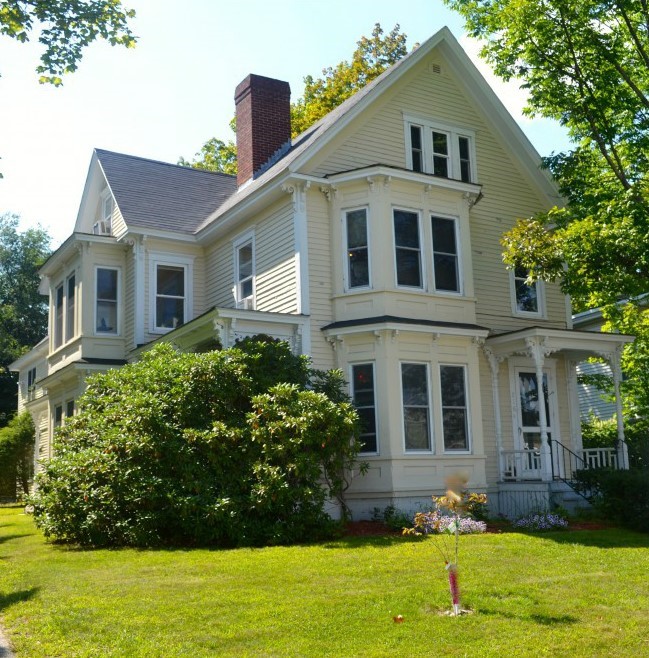
(Aging nicely, some 60 years later,  though no longer gray,  no longer a home,  nor even a house in the traditional sense – now simply a soulless, sterile structure, i.e., a business office.) 

Maybe Just One Thing

vsvcr2s
Wayne Michael DeHart   (February, 1996)

I have had few good days of late.

At age 47, I have discovered that my dreams will not be realized.

Such discovery was not sudden. I have known for some time that I have been losing control of my life. Those around me define it as simply a mid-life crisis, an awakening of sorts, to the debilitating effects of time and spent emotion. This categorization of my condition is not accurate. I wish it were that simple, but it is not. Nothing is simple when you’re tired and alone at age 47. Tired and alone and beaten down by too many bad days.

So often I’ve heard people say they would decline an opportunity for a “do over,” an opportunity to go back in time and live their life over again.

To accept that opportunity would be to reject one’s past and present. Such rejection would be an admission of dissatisfaction, of poor choices, of failure. It would be a sign of weakness of mind and spirit. It would betray family and friends, It would be indefensible and unacceptable. It would strain the soul and hurt the heart.

I, however, would indeed go back. Without hesitation or trepidation. And I would do a thousand things differently.

Or maybe just one thing.

I would have seeded and nurtured friendships. My privacy and independence are false treasures I have guarded too closely through the years. To a fault, and to an obsession. Consequently, as I grew older (though upon reflection not wiser), I spent more and more time speculating, imagining, daydreaming, fantasizing  – always sure that there would eventually be time for fulfillment of every wish, every goal, every aspiration.

Time moves slowly for the young – a blessing unrecognized by those who count the days until they reached milestones of age 12, then 16, then 18, and finally 21. Milestones of a driver’s license, graduation, marriage, parenthood and the meaning of life.

I counted those days. Such a fool. I want them back. Each of them. All of them.

I would stop dreaming, and start living.

But now it’s too late for me, so I’ll settle for a  wish fulfilled. For a friend – one that will help make tomorrow a good day.

A friend that will care for me and about me. One that will be glad that I’m here, and will notice when I’m not. One that will leave Wordsworth’s beloved daffodils at my marker.

One that is real – in a world where nothing else is.

view from a hole

vsvcr2s
Wayne Michael DeHart    (September, 1996)

i look up and around as i slip down,
the light of tranquility fading

i scratch and i claw till my fingers are raw
losing my grip and my strength

i try hard to think as i continue to sink
to a depth too many have known

i curse my plight but continue to fight,
though my resistance mournfully wanes

my limbs are now weak and i can hardly speak
as the cylinder narrows its gauge

my will has expired and I’m so hopelessly tired
that i pray for the bottom to rise

but my descent is not done  (it’s just really begun)
so i resolve to shut down my mind

it’s my way to cope and cling to the hope
that my fall is really a stumble

and that i’ll awaken again
to a smile from a friend

illuminating . . .

this darkest of views
from this deepest of holes


#

ade559607

Annie’s Time

vsvcr2s
Wayne Michael DeHart   (June, 1997)

Paul and Annie met and fell in love their Senior year in high school.

Well, not exactly.

Better said, it was in their last year of school. It was a different time, and Senior year was never a reality for either of them. Not even in the distance. Not even close. Reasons were many, and choices were few.

And while they did indeed meet in whatever final grade that was, the love came later.

For two, maybe a few, years they were simply best friends. She helped him work on his first old car, and he helped her eat the first cookies she ever made all by herself. She told him he was cute, and he told her she was cuter. He was shy and she was not, but the conversation never lagged and neither did the flirting. They kissed a few times, innocently and briefly, each time feeling both giddy and guilty, and retreating quickly to the safety zone of friends just passing time together.

Their first grown-up actual date was on Saturday, December 6, 1941. The now-maturing young couple went to the Gardens Theater to see Myrna Loy in “Love Crazy” and laughed with everyone else from beginning to end. The Great Depression was finally behind those in the theater that night, and with new storm clouds on the horizon, it seemed somehow the right time to lighten up, even when the goofy one-liners and forced frivolity of the film weren’t really that funny. It was like school recess, after taking a test, when the kids know there will be another one awaiting them after the bell rings, calling them back inside to their pencils. Just enjoy the fifteen minutes of freedom. And now, just enjoy the movie.

Later, the significance of the movie’s title was lost on them as they gulped down ice cream sundaes at Keller’s Restaurant on Main Street. He gulped faster, and she offered him the rest of hers. As he would later learn, it was the first of many such gestures to come from this girl who was getting cuter, in his eyes, by the day.

Annie’s “be-home-by” time was fast approaching and it became a quiet ride home for the preoccupied teens. At her door, the goodnight kiss was different than those they had shared as boy-girl companions. It lasted longer and led to another. They lingered. Until the porch light flickered twice, that is, sending Annie inside and Paul to the cold seat of his car.

Their innocence was lost – not that night, but the very next day. Along with that of millions of other young Americans. Lost forever in a hellish two hours of fire and fury at a faraway, strange-sounding place called Pearl Harbor.

Just two months later, at 17, Paul joined the Navy and was soon deployed to the Solomon Islands aboard the battleship U.S.S. Washington. His world became a whirlwind of waters off Guadalcanal, the Philippine Sea, the Leyte Gulf, then Iwo Jima and Okinawa. Annie’s world became one of loneliness and health problems, worry and wondering. After his ship limped into Puget Sound for repairs in the Spring of 1944, Paul unexpectedly arrived home on leave, surprising and then marrying Annie on April 13th in a hastily-arranged small ceremony at St. Joseph’s Cathedral in Manchester, NH.

Back into warfare in the Pacific just two months later, his world returned to chaos and hers to frailty – the burdens of both worlds acutely heightened and intensified by their new but separated roles of husband and wife. It felt like forever, but it was just eighteen months after their nuptials that Paul was headed home for good, discharge papers in hand. Other than partial hearing loss, he was coming back from  the war unscathed. Physically, at least.

She met his train at South Station in Boston on October 1st, 1945, only a month after the surrender of Japan, marking the abrupt and unofficial end of the war.  Upon seeing him standing there, searching her out in the crowd, she started crying crazy tears. She had imagined on the trip down that she would go flying into his arms, kissing him madly, just like in a scene from one of the movies she had seen back home at The Gardens. Instead, she hesitated, experiencing a brief moment of inexplicable awkwardness, as if the moment may not be real. Then he saw her too. They met halfway, but there was no jumping into outstretched arms. Instead, they locked eyes in silence, hers still glistening from the tears.

He told her he loved her…
she said she loved him back.

Then they embraced, and held on long and tight.

They didn’t let go until Annie’s heart stopped beating on a rainy April night in 1994, just six days short of their 50th wedding anniversary.  The childless couple had made no special plans for their marital milestone. They joked about renting an old black-and-white comedy movie and making home-made sundaes (she would share hers with him, of course), and getting Annie tucked in before her curfew. Some things, however, were just not meant to be, and we don’t have to understand why.

Their love – the one between the cute guy and cuter girl – was genuine and ran deep. Potholes and curves in their long road were not infrequent of course, they never are. Still, they lived their love each day in at least some small way. Sometimes with words, sometimes with actions, but always with purpose and pride.

As Annie’s health declined, they greeted each new sunrise by praying silently together, another subtle concession she gladly made to accommodate his self-consciousness. He had not prayed aloud since he left the Navy, not even at church, which she always attended and he only sometimes did. So praying in silence it was. And it mattered not to her, as long as they were doing it together. Those were precious moments for Annie, who remembered the countless nights she had prayed for Paul’s safe return from the war.

His days since her passing all run together and he seldom leaves the small home where he still feels her presence in every room. He sees her smile in the kitchen , feels her warmth in the bedroom, hears her stories out on the porch.

Paul loved Annie and Annie loved Paul. Neither ever wavered. But then, you somehow already knew that.

Wait. Did I say Paul “loved” Annie?  No, Paul LOVES Annie.

He tells her so, out loud, every morning in his prayers.

And in the stillness of the dawn …
she says she loves him back.

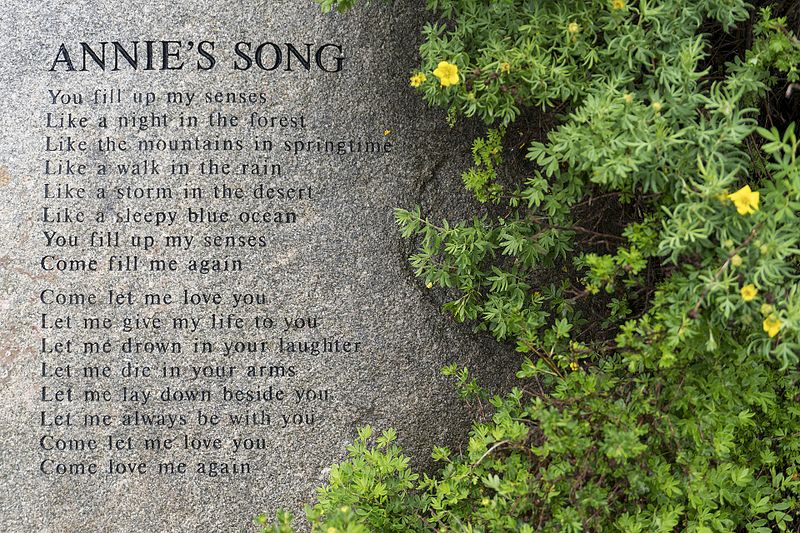
Annie's_Song,_John_Denver_Sanctuary_(27808144296)

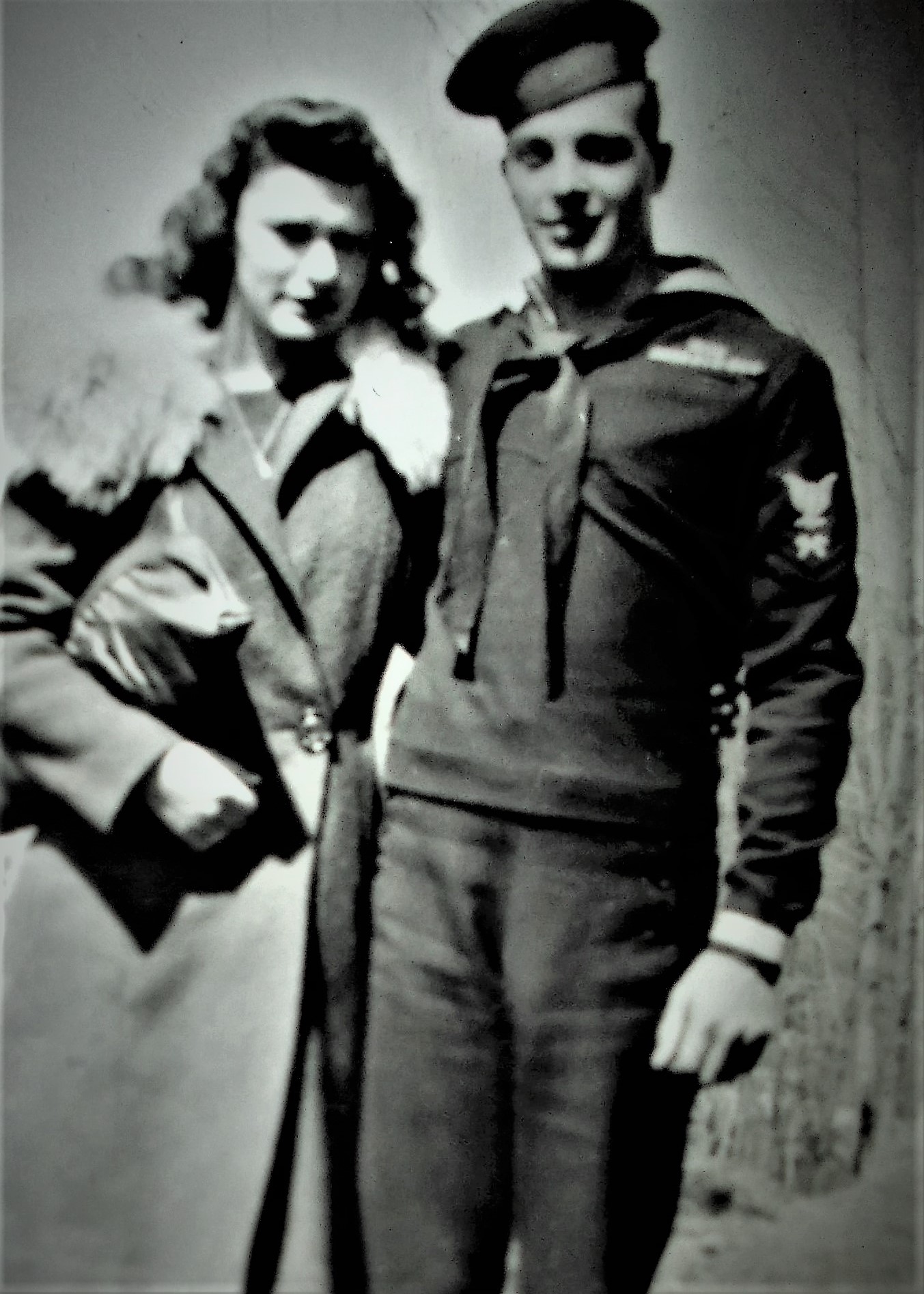
Paul & Annie
Thank you both for all you did.  You live forever in my heart. Hope all is well on the other side of the rainbow …

The Fire in Jimmy Louis


Wayne Michael DeHart   (June, 1997)

He endures the emptiness of love lost, of dreams forsaken.
His canvas mourns in brooding browns and ashen grays.
Most say his drive and direction were lost
when she exploded out of his life,
shattering his heart, draining his soul.

The one most likely to succeed, they said.
Ambitious and certain with vision and goals.
But youthful daring and reckless confidence
were too soon manifested in acts of courage in conflict
that brought a hail of hot metal rain to nerve and bone.

Dazed and defeated from the dual punches to his gut,
( the loud rolling thunder of her retreat, and
the lightning-quick loss of his mobility and dignity ),
his memory of her white-hot kisses had faded to black.

But the mortar’s flame and flash and fury had not.

Now, this day, he vows to cast off the shroud that darkens his world,
that shelters his apathy, and shields his despair – and incite the embers
of the flickering,  lonely flame she left embedded deep within.

He will awaken his canvas with glorious greens and glistening golds,
then lay down his brush and wheel himself
into the night
into her sight
into her light
into her life
into her.

Together, they will
find . . .
feel . . .
fuel . . .
the fire in Jimmy Louis.

#

His canvas evolved from this:

background-1134468_960_720

to this.

greenabstractflowersgrayfractalsembrace_www.wallpaperhi.com_93

Footnote: Next of Kin

vsvcr2s
Wayne Michael DeHart  (February, 1997) 

His heart expired at sunset with no one at his side.
The hospital bed was slowly stripped of its linen by
the amiable nurse’s aide ¹ who had blessed him with
winks and nods and smiles, each capturing his gaze.

Nary a flower nor a card had adorned his muted room.
The young girl wondered how this endearing gent
could be forsaken by those whose paths he crossed,
left in silence to struggle alone through his final days.

The doctors had prepared him for the coming of his Night.
The hard news did not surprise him, and he shrugged it off
with a simple nod, amid drifting thoughts about working his
life away, only to to be  prematurely, permanently “retired.”

Days passed. He watched the door through hopeful eyes.
Maybe an old friend, or a neighbor, or someone from work,
would stop by, talk baseball and music, and wish him well,
and remind him that he had been respected and admired.

As time ticked down, no one came to sit down by his bed.
His had been a mostly solitary life of unattended needs;
he filled endless hours of solitude and sadness with idle
speculation and sleepless dreams under unshared covers.

He once loved a Jersey woman who promised him forever.
Then she left quietly in the night of their eighty-third day,
and he soon realized he would never again find such warmth
in the barren eyes and hollow touch of fleeting, casual lovers.

In his fifty-first year, a vicious cancer ravaged his insides.
His restless mind became cluttered in his twilight hours
with the what-ifs and should-haves, the inevitable regrets
of a beaten-down guy who knows he will soon be dead.

He was certain that his passing would hardly be noted.
But while the rest of the staff took the flatline in stride,
the nurse’s aide, a Philly girl, sat down where no one had,
in the never pulled-up chair, right next to the empty bed.

She bid him Good Night and wished him stars in his sky.
Eyes closed, she felt his presence, and paused for a breath,
fondly remembering his face, calmly embracing his grace –
before rising, then looking back, with a last wink and a smile.

¹ She somehow knew that in passing, he found what he had missed.
  Because the girl who touched the spirit of the man
  without a wife was, unknown to both,
  his only child. 

#


Words you can touch – can touch you Back

vsvcr2s
Wayne Michael DeHart

Rescued from the furthest corner of the very top shelf, the nondescript brown book revealed itself to be dusty and dated, seemingly dispensable now after a long-ago demotion from displayed to displaced on the still-sturdy steel shelves of the library’s basement. I sat down in the nearest chair and chose to allow the dust to see another day, gently opening it mid-binding, to a random yellowed page of crowded text and curious font.

I started reading from the top of the left side of page 46, mid-sentence, absentmindedly turning page after page, digesting every word, absorbing each paragraph. Wasn’t sure what I had missed and didn’t care. It was not unlike walking into a roomful of strangers and discreetly deciphering the multi-toned, ongoing chatter flowing from the small groupings surrounding me. The players are out of focus – fleetingly faceless, neighborly but nameless –  enabling me to discreetly follow along, filling in the blanks with my own spontaneous words and thoughts, my own  images and interpretations. 

I began to read at a faster pace, forming opinions of the characters and the events unfolding before me, oblivious to the time ticking by as I made assumptions, while continuing  to fill in the blanks on the fly. I had rolled into the realm of the rabid reading zone, where time stands still and instincts are cast aside like empty Coke cans. 

That is, until a desk phone trumpeted loudly nearby, and my divergence into discovery ended abruptly. My eyes shifted to the bottom of the page – 97 ! Had I really journeyed through 51 pages in a mere few minutes?  A quick glance at the clock on the wall behind me jolted me back in to the reality of a Tuesday morning in November of my junior year of college.  Minutes? Yes, about 75 too many,  and I was due in a classroom across campus at noon.

I gently closed the book, determined to preserve its cloak of noble dust, and stretched to return it to its rightful place on the sleepy top shelf in the musty corner of the basement, there to rest in peace and gather more dust till the next  curious  explorer stumbled along in search of a neglected  literary treasure.

In the years and decades to come, I sought out dusty volumes on the highest  and lowest shelves in libraries and used bookstores from here to there and places in between. The more dust, the more yellow the pages, the greater the anticipation and excitement. And for those volumes, the game plan was always the same – open it up to a random page, start reading, and keep going until a phone rings, my Coke can is empty, or my bladder is full.  And then stop right there, on the proverbial dime.  Put it back in its rightful place, its dust undisturbed, its beginning and its ending left to exploration by another reader, on another day.

All these years later, I can’t tell you the title of that first rescued book. I didn’t forget. I simply never looked. I didn’t want to know because I didn’t want to feel compelled to find a copy of it and just maybe read it from front to back. The experience  was perfect just the way it was – 51 pages of faceless and nameless characters letting me listen in to their story, mid-stream,  thus affording me the gift of completing  the story, fore and aft,  in my words, filling in the blanks from the pages that came before I started reading, and the pages that followed where I left off. In any given instance, I could serve as both author and reader, creator and consumer, maker and user. Always and ever changing. A mystery to be solved.

You know, much like that first old, dust-covered book, waiting patiently to be rescued, its words to touch, and  be touched.

#

#

qqqqr456