Bar Belles & Dumbbells

Wayne Michael DeHart   (May 26, 2024)


Writer’s Note:
This was my entry in the Mensa Bulletin’s 2024 annual fiction competition. It was published in the September, 2024, edition of the magazine, the third time one of my stories has appeared in that publication. (Yay for me and tired old men everywhere!)

_______________

October 5, 2018

Three they were, their futures bright,
noses in law books, deep in the night.
Fun forgone, they trained for the fight,
turned off the dark, turned on the light.
Tested two days, and wrote what’s right.

Awaiting their scores, with muscles tight.
Ten weeks of torment, no verdict in sight.

I wrote a poem. Just now. Look.”
“That a girl. Nothing like a septet to calm the mind.”
“A what? They said ten weeks, right?”
“No, they said about ten. Maybe twelve. Possibly more.”
‘I’m gonna bust outta my skin here, Kerry. Can we go to Boston’s Brewin’ for just one drink, then come right back? We can just forget to mention it to Karly. No big thing.”
“You know our deal, Gwen – booze, you lose. It’s been a long haul, we’re almost there. Just go down to the exercise room to blow off steam. Do some crunches. Pick up a couple of dumbbells.”
“You mean like Lenny and Louie? Yuck. No, thanks. How many crunches?”
“About ten. Maybe twelve. Possibly more.”
“Kerry?”
“Yeah, hon?”
“Bite me.”
_______________________

Back Bay, Boston. An up-market, two BR, two BA, condo owned by Karly’s moneyed uncle, who sold a start-up for big bucks at the age of 31, then left Boston to hang with the Silicon Valley crowd. He had purchased several rental units at Trinity Crossing before heading west, and had offered his only niece and her friends a stunningly generous, below-market rate on his best unit when they moved in during the early spring of 2015. He knew they planned to begin law school that fall and, well, it was the least he could do for his late wife’s family. He kind of dropped a hint that, if they made it through and passed the bar, perhaps free legal advice for life might be a thoughtful return gesture on their part. They laughed that one off and always sent the check on time, and he never raised the rent.

Karly Drake, Kerry Loring, and Gwendolyn Lynn were each in their late 20’s as they awaited the results of their July bar exams. The liberal arts grads met in mid- December of 2013, when they began work as rookie hostesses at Red’s SawxHouse. The setting was a bizarre blend of an urban, urbane, baseball-themed cocktail lounge at street level, and a roadhouse-type bar venue, with a vipers’ den vibe, occupying the basement. Nestled in the resurgent fringes of Boston’s once-notorious Combat Zone, the establishment routinely turned generous profits, despite a lingering, below-the-surface culture clash between the white collars sipping bourbon, Bailey’s and Bordeaux up top, and the blue collars guzzling overpriced longnecks and gobbling free peanuts at the bottom of the stairs.

Karly, Kerry and Gwen (“KK&G”) were characters with character – intelligent, vibrant young women who had quickly tired of their mundane, entry-level jobs after graduation. They became fast friends, sharing long-term aspirations to be something more than degreed go-fers for smug guys in rumpled suits. Though highly astute and self-aware, they shared a sassy, silly side that was a hoot back at the condo, but in public, could be a wee bit embarassing among, you know, adults. Still, for the most part, they managed to conduct themselves in an appropriate manner because this was Boston, where sillies were sent to the end of the line, or to Maine.

During their ten-month tenure in the blue Brahmin haze of Red’s upstairs lounge, their quick smiles and polite playfulness were rewarded with a shipload of tips, and an equally generous level of respectful endearment from the patrons. Nevertheless, Karly wondered aloud what it would be like to dive headfirst into the murky mire below them, where rude, crude snakes slithered and slid, singing a siren’s song. Kerry rolled her eyes. “Sounds fabulous.” Karly persisted. “Six months. We walk the walk for six months, and then we’re outta there, the Lord willing and the creek don’t rise.” Kerry and Gwen exchanged puzzled glances upon hearing about the creek, but both were gung-ho and game. Red said he’d allow it, and wished them well “down in the pit.” He told them they could come back upstairs at any time if they missed the tips. Or the clientele. “They want you back, and you haven’t even left yet!”

The below-deck newbies were well-served by an instinctive, heightened vigilance in unfamiliar surroundings and circumstances. They were fun, but not as in floozy fun. They wore their strong intellect and confident poise comfortably, mastering the fine art of being flirtatious without being salacious. They knew how to maximize tips while minimizing close contact. They didn’t play the customers, nor did they play with the customers. It seemed there was no shortage of obnoxious dirtbags and grabby sleazeballs among the regulars, but the ladies artfully ducked and dodged the bad ones, while drawing out the best in the rest.

There was also a benign grouping that KK&G dealt with gently and compassionately, sensing an ever-present awkwardness and social clumsiness. These guys hung together, numbering fewer than ten on any given night, and Kerry was surprised they kept coming back. “They just seem so out of place and unhappy here.” They were mostly quiet and shy – unassuming, passive creatures who personified low self-esteem. The other hostesses were standoffish toward them. (“I don’t trust a man who doesn’t hit on me.”) To the rapscallions rejecting them, these subdued, gentle men were fair game – to be openly belittled, degraded, and labelled as dimwits, dolts, dorks, dullards, and the most piercing cut of all . . . dumbbells. It rubbed the ladies three the wrong way. As their six-month tenure there wound down, they did their best to prop up the outsiders, to learn about them as individuals, and to stand up for them openly and assertively.
_______________________________

April 18, 2015

On their last night on the job, a Saturday, they were delighted that more than twenty of the perceived misfits had turned out to see them off. Their shift was both sad and satisfying, a textbook mixed bag of emotions. Shortly before 11:00 PM, each of the three hugged every one of these special guys before departing, then broke house rules by having a quick parting glass with them. As they headed for the stairs and a final walk-through with the upstairs crowd, they heard, “Ladies, wait!” Those same guys gathered around them as each was handed a very small, rectangular box.

Looking unsure, the three of them hesitated. Many of the rambunctious regulars had taken notice. They watched in curious silence.

Geez, OPEN them already,” someone blurted out in a deep baritone. Laughter. They did so, slowly and together, like kids on Christmas morning. Inside each was an engraved, sterling silver dog tag, resting on a bed of black velvet. Karly, Kerry, and Gwen each saw their name, next to a heart, shining back at them, above the simple words, “Thanks for giving a damn. Your friends, the Dumbbells.”

Well, shoot.

Another round of hugs ensued before the now-free three scampered up the stairs for their final goodbyes. Red was waiting for them. Karly showed him her dog tag. He bit his lip and nodded his head, approvingly. “Well deserved.” He suggested they mingle for about half an hour and then meet back with him at the main bar in the center of the lounge.

So mingle they did. They had spread out to touch as many bases (hey, it’s a baseball bar!) as they could before making their exit. Seemed like there were familiar faces at every turn. It was close to 11:45 when they heard Red on the mic, acknowledging their presence, and imminent departure.

They quickly worked their way through the crowd, into the spotlight. Red had the BBB (big burly bouncer) lift each of them up onto the smooth mahogany surface of the bar. They were clearly animated, bobbing their heads to the cheers. Red then lifted what appeared to be Boston baseball jerseys up to them, folded back side up. They held them up high to the crowd, each revealing a large number “1” and their own names across the top. None of the three had even noticed the front side that was staring down at them. Red, back on the mic, suggested they “turn ‘em around, ladies.” (Kerry playfully turned herself around before Red added “The jerseys, ladies, the jerseys!”)

As native Bay Staters, they had expected the familiar “Red Sox” lettering, bold and red, across the front. Smartphone cameras captured the moment that the expected became the unexpected. The letters were in fact decidedly bold and red, but boldly read: “BAR BELLES.” They quickly donned the jerseys as a couple of other upstairs hostesses suddenly appeared on the bar, one from each direction, both wearing those same tops. “Ladies and Gentlemen, please say hello, and goodbye, to your 2015 Boston Bar Belles.” The guys did what guys in bars do when looking at ladies in uniform – they got boisterous and went bonkers. Following Karly’s lead, her four wingwomen began to vigorously flap their jerseys up and down, making the letters jump and jiggle on the way up, then bump and wiggle going down. The bellowing Beantowners were feeling festive; high-spirited and high on spirits.

Red’s voice boomed across the room. “Listen up! Three runs down, bottom of the ninth, bases loaded. Who ya gonna call?” In response, a stoked Gwendolyn Lynn let loose her sassy girl, yelling “Bar Belles!” while putting her hand to her ear. A chorus of male voices took the cue, retorting with fist pumps and a glass-shattering “Bar Belles!” of their own. Gwen again, whipping her long, auburn hair from side to side – “Bar Belles!” And the guys gave it right back again. Meanwhile, Gwen’s festive friends kept shaking their shirts, fueling the fire in the frenetic faces below them. A few more rounds of the exchange ricocheted off the walls, before a fast-paced, full-throated, flurry of five more for the road closed out the revelry, carrying the farewell celebration to a rocking, rolling, rollicking climax.

Their fans had just witnessed a real world grand slam, and fittingly for KK&G, a breathless walk-off win.

A fitting finale, indeed.

The three friends waved one last goodbye before being helped down to solid ground. Once there, they headed straight to the door, and out into the cool night air of early Spring. They didn’t look back.

The ten months upstairs, and the six months downstairs, at Red’s SawxHouse had left its mark – on them, and on a slew of grounded regulars. Surely, in the near and distant future, many would tell a friend, a co-worker, or the person sitting next to them at Fenway Park, about the top-shelf, infinitely-cool, beloved Boston Bar Belles of days gone by.

Their midnight cab ride back to the condo, on the 240th anniversary of some other Bostonian’s quite different midnight ride, marked the end of an amusing adventure, and the beginning of getting down to business. For these rejuvenated women of the Back Bay, “Bar Belles” was about to take on a whole new meaning.

______________________

October 12, 2018

Just one week after penning her ode to impatience, Gwen let out a shriek in the early afternoon that could be heard in the Berkshires. It was a rainy Friday, and her roommates were down in the exercise room again, pumping those dumbbells. Bypassing the elevator, she scooted down the stairwell, missed a step, and nearly face-planted on the next landing. Recovering nicely, she avoided the hospital ER and arrived at the target “ER” undamaged.

She stood in the doorway, chirping. Karly saw her first, and immediately knew this was not a standard “I just had a brownie and it was sooo good!” kind of elation. Gwen had printed out the e-mail before descending the stairs, and waved it around like a $20 tip at Red’s place – “Who’s bad? I’m bad. Passed that sucka first time outta the gate.” Upon hearing that, Kerry quickly joined them, attacking her phone. Seeing Karly step away to towel down, Gwen simply assumed that the future managing partner of their firm simply had no sense of urgency, as she had been one of the top grads in their law class. She turned her eyes back toward Kerry, who, moments later, hooted “YEE-HAW, baby!!!” The two of them fist-bumped and chest-thumped, strutting and swaggering like bosses. “Two down.”

And then there was one.

Minutes later, there was still one, as an ashen-faced Karly turned away from her phone, sat down on the nearest bench, and buried her face in her towel.

Stunned at what was clearly happening, Kerry and Gwen shut down their antics and just waited. Karly removed the towel, but kept her head down as she gestured to them to sit down beside her. They did, lowering their own heads in a show of unity. Karly slowly put an arm around each one, and pulled them close. “Ladies, let me just say . . . Welcome to THE BAR, bitches! We did it!”

Back upstairs, they changed clothes, posed for a selfie, printed a copy, then framed it.

That night, for the first time since their grand goodbye, they went to Red’s SawxHouse. They knew that familiar faces would now likely be few and far between, but they felt compelled to mark the occasion by returning to the place where the seed had been sown. Kerry, hoping that they had not been forgotten, had called ahead to be sure that Red would be there. They wore their “Bar Belles” jerseys under their coats, and pulled Red, who was elated to see them, into a quiet corner. Kerry was clutching a laptop bag.

In unison, they pulled off their coats and flaunted the jerseys in front of him, in remembrance of that night. He was beaming. Then Kerry pulled the framed photo, signed by the three of them, from the bag and placed it in his hand. The selfie showed them in matching business suits, briefcases in hand, standing stoically behind a bronze statue of Lady Justice. It was a keeper.

They had a drink with him, told him he was a good boss and a better man, then everyone took turns toasting each other. Just before leaving, Karly pulled a small, rectangular box from her coat pocket, and handed it to Red. He lifted the cover, and saw something he had seen before – an engraved, sterling silver dog tag. It was inscribed with his name and a heart over the words, “Thanks for giving a damn. Your friends, the Bar Belles.” Just as he had done that night, he bit his lip and nodded his head. But this time it was Karly’s turn to say, “Well deserved.”

She removed it from the box, and stretched to hang it around his burly neck. They lifted their own prized tags out of their jerseys and coats, cuddled up to him, and while all four pointed at their own tags, a hostess used Kerry’s phone to record the moment. Karla promised Red a signed and framed copy of this photo as well. He then took a circuitous route while walking them to the door, taking pride in pointing out each of seven wall posters that captured the Bar Belles dancing his customers into a frenzy in an electric farewell. Indeed, they had not been forgotten.

In the months that followed, the trio put their dream of opening their own firm on hold, and all took jobs as public defenders for the Commonwealth. They felt a need to test their mettle early on by experiencing the hardscrabble side of advocacy, They wanted to defend people who they may not like at all, and to revisit their own mistakes in pre-judging others. Each of those presumed rogues and rascals in the basement bar had a story, just as their favored “dumbbells” did, but they never asked, and never listened. The astute self-awareness they had been so proud of, well, maybe it was time to work on that too.

All rise.” On that note, for each of them, completing the challenging transition from bar belle to belle of the bar, really was something to stand for, and stand up for.

Three they were, their futures bright . . .

turned off the dark, turned on the light.

#


The Bitter Taste of Suite Deceit

Wayne Michael DeHart  (May, 2023)

It was almost 9:00 PM by the time Hannah Gray and Gary Glidden checked into the Commerce Hotel, in downtown San Antonio, on Thanksgiving Eve. Holiday traffic from Austin had been heavy, and their late arrival had already delayed the secretive session of privately-owned Harrison Foods’ nine-member Board of Directors.

The five men and two women had been sworn to secrecy regarding the time and location of the gathering and, for that matter, the fact that there was an ad hoc meeting at all. The remaining directors, brothers George and Jason Crane, had not been notified, and for a very good reason. Word was that their conduct had been deemed by The One to be detrimental to the company’s reputation. Their futures would be decided that night as they unwittingly gathered with their families back in Austin.

It would be fitting to say, in light of the fact that Harrison was rooted in the commercial baking sector, that the sugar was about to hit the fan, and no sweet deals would be forthcoming. The One was reportedly irate and unforgiving, and had issued a very harsh motion for the  seven directors to approve. All seven were based in Greater Austin, the corporate home of Harrison Foods; thus, the San Antonio locale, some 80 miles to the northeast, had piqued curiosity.

Gray and Glidden dropped by their room to don their mandatory Director Suits, then joined their associates in  Executive Suite 507, where Chairman John Horne’s escape bag rested conspicuously by the door. Horne cohabitated in a downtown Austin penthouse loft with The One — a powerful, enigmatic, magnate who always commanded the last word in company business.

In addition to Horne, Gray and Glidden, directors present were Elizabeth Murphy Durrow, Walt Schroeder, Barlow Giles, and Craig Traylor. All were properly attired in the traditional Harrison Director’s Suit, which was actually a yellow, cotton blend sweat-suit, adorned front and back with a baker’s dozen images, in various sizes, of the company logo – the brand’s  iconic dark chocolate chip cookie.  Scattered haphazardly across the yellow material, they looked like weathered sunflowers tumbling askew. The offbeat garments were informal, gender-neutral, and comfortable, and reflected the casual quirkiness of Harrison’s guru, who embraced eccentricity.

The One’s personal attorney was also present in the room, to everyone’s dismay. Even though he did not represent the firm, he had become an opinionated and unwelcome presence at company events for years, and was known to be a pain in the collective assent of the corporate attorneys.

The other directors had been firmly instructed by Horne not to communicate with the Crane brothers about the meeting. Their absence confirmed the weight, though not the substance, of the  innuendo and rumors. This was something big, and they relished the power they were surely about to employ.

John Horne called the meeting to order at 9:32 PM. The attorney immediately handed him a sealed and taped 9×12 Kraft envelope. Horne dramatically held it up, displaying it to the others as if it was a message from On High. After momentary frustration as he fussed with the tape, he tore it open with an air of grandiosity, and quickly skimmed through the single sheet of paper it contained. He breathed deeply, his nostrils flaring. Then he spun himself around, grinning maniacally. His eyes caught fire. He rolled them left and right, taking in the faces of his colleagues, then howled with a sick blend of contempt and elation.

He gleefully told them they were all fired, canned, sacked, given the heave-ho,  effective immediately, and that the new Board would operate with just three members, with George and Jason Crane having been absolved of their sins and retained in good standing. Gasps, then silence. He autonomously declared a 7-0 approval vote, then abruptly adjourned the meeting. He callously wished them each a pleasant holiday, and herded them out the door, like cats astray. His only regret was that he didn’t have a six-pack of symbolic, rubber axes to hand out as mementos of this special occasion. Parting gifts are always appropriately delicious. The boss taught him that.

The One’s attorney appeared to be stunned at Horne’s unexpected arrogance and incivility. He picked up the sheet of paper, perused it, put it back into the envelope, and tossed it at Horne in disbelief.  The Chairman had always resented this smug turd who acted like he owned the business and was always dismissive of Horne’s interactions with The One. He proceeded to usher the shit-bag out the door, with a parting shot –  the third cousin of the aforementioned parting gift. “Should have fired you too, asshole!”

The unfazed attorney looked back and offered a knowing laugh, before returning to his own deluxe suite, where a bottle of champagne was chilling and a female guest was likely warming up the sheets. He wasn’t about to let a buzzard in a cookie-covered sweat-suit ruin his Thanksgiving getaway. Still, he was puzzled over the Chairman’s bizarre response to The One’s directive.

Meanwhile, the severed six shed their silly suits and gathered in the hotel bar, where they drank themselves into a group stupor. Gray and Glidden slept it off in their room. The remaining fired four, suddenly in the role of irrelevant pawns, faded into the silent shadows of the Texas night.

John Horne was not, by nature, a people person. Buttressed by the events in Suite 507, however, he had further morphed into a cold-blooded cutthroat. He theatrically placed the envelope into his new leather attaché case, locking it for safekeeping, After donning jeans and a company hoodie, he swaggered out of the hotel. In the parking lot, he gently laid the briefcase on the rear seat of his prized ’65 Thunderbird, then headed back home to Austin, to inform The One that the deed was done. Surely, he would receive “Attaboy” accolades and the usual “special favors.” Images of pink SnoBalls and Kentucky Bourbon filled his head, and he pressed down harder on the gas.

When he got to the penthouse, the door was locked. He tried his key, but it didn’t turn. A recluse extraordinaire, The One rarely left the nest, so something was off. He knocked. Nothing, He shouted. Nothing. He called in on his phone. It went straight to voicemail. He texted. Nada. It was well past midnight. Worried, he placed calls to the resilient Cranes to fill them in and feel them out, suspecting corporate foul play.  Both answered, despite the hour. Both hung up on him. Not a good omen. As a three-member Board, they could overrule him on a whim, out of pure spite, despite his steering capacity as Chairman.

Reluctant to make waves that might anger The One, the despicable douchebag checked into a budget motel to get some much-needed sleep. He was certain that Thanksgiving morning would bring simple answers and a reunion with his housemate.  It didn’t. He left more voice messages, to no avail. Distraught, he had one too many at the only open downtown bar he could find, then foolishly tried to drive back to the residence.  Suddenly, WHAM! His T-bird was T-boned by an unforgiving  4×4 as he ran a red light. Just before impact, the briefcase still rested in peace where he had placed it the previous evening. After impact, well, it didn’t matter, because, in the blink of an eye, he had become just another irrelevant pawn, a jaundiced John, a silenced Horne.

Days later, The One eulogized him at a near-empty chapel.  Unsurprisingly, none of the six directors he had ridiculed and sent packing back in San Antonio were present at the brief service. Gerald Murphy sat alone in the back row, expressionless. Later, The One brought him home. Home to the penthouse loft, the one she previously shared with her late husband.

Seventeen years earlier, John Horne had gotten down on a knee in Paris, popped the question with a stunning, three carat diamond ring, and told her he knew  that she would always be “the one.”

Karma. Kismet. A Kodak moment in a selfie world.

A blind date with a 4×4 had deprived John Horne of a second reading of the letter, from which he would have learned that, in addition to the Crane Brothers (who had been  active participants in the upheaval), the revamped Board would include a new Chairman – the aforementioned Gerald Murphy, The One’s  personal attorney.

At 9:34 PM,  after he had wasted  more than a minute berating the buxom Ms. Durrow for making her sunflower cookies “prance around in a provocative manner,” on Thanksgiving Eve, in Suite 507 at the Commerce Hotel in San Antonio, Chairman Horne had scanned the page too quickly, jumping the gun with his assumption that he was to be the third member and retain his role as Chairman of the downsized Board. In his exuberance over the sacking of his fellow directors, he had  started waving the page around and doing a happy dance without reading the last couple of lines. ALL directors present were to be declared terminated, without cause, immediately upon the directive being read aloud to the attendees in the presence of The One’s personal attorney. On her authority, as sole owner of Harrison Foods, ALL, including the one who was about to receive divorce papers, had been kneecapped.

Gerald Murphy had indeed been baffled at Horne’s apparent celebration of his own dismissal. Even more so than the woman waiting for him with the champagne and warm sheets. Before their night of drinking and playing and giving thanks began, he initially feigned a serious tone, somberly and dutifully reporting the results of the meeting to her, including Horne’s obviously incomplete reading of the page, as well as his unhinged celebration. Then he grinned. “Olivia, get this. After they all left, the numb-nuts said, ‘I sure as hell Horne-swoggled them sunflower stooges to hell and back. Did you see their faces? Did you see ’em squirmin? Oh, man, revenge is sweet sayeth the Chairman. Now, time for you to hit the road, Skippy.’ He called me Skippy!  What a friggin’ hoot.”

From a dim corner of the room, clad only in a blue-velour Commerce Hotel bathrobe, The One slithered sensuously toward him, making a cackling sound, a blend of witch and hen, while letting out a howl of her own. “Show me, hon. I wanna see.” Then an impatient, “No, not that, that’s for later. The video.” The beaming Mr. Murphy, at her request, had stealthily, clandestinely, videotaped the meeting and the aftermath, just the way he had most of those company events (and affairs!) that he had routinely dropped in on. Poor John Horne. She had seen and heard everything, all of it, over the years, and kept the tapes as evidence in the upcoming divorce proceedings.

“See there, I specifically told him that when you handed him the envelope, he was supposed to actually read the order to them, not read it to himself and ad-lib an announcement. He never listens. Did he keep it as a souvenir?” “Probably, not sure.” “So he could be re-reading it as we speak? And realizing he’s out the door too?” “Yep.” They both imagined him looking at it again to recapture, and savor, the thrill of victory, only to be hit between the eyes with the real story. It was  a moment of shared ecstasy, and they hadn’t even begun to make love yet. She turned off her phone and salivated over the panic the old boy would feel when he got home and she wasn’t there. This would be her best Thanksgiving ever. “Serves him right for perving on Beth’s big tits just before the bomb was dropped.”

“Olivia, do you want to see that other thing now? It’s Murphy’s law, ya know.”

“What a braindead meathead I married! What a sap. Took his money right out from under him and he never had a clue. “

(Guess not, Mr. Murphy.)

“I give the chump a few bucks here and there,  let him cop a feel now and then, and the schmuck toes the line. Easy-peasy. Johnny Boy keeps thanking me for letting him use that clanky, old Ford the Governor signed over to me for giving him my, um, full-throated endorsement three years ago.  ‘Gee, the Governor is such an honorable and generous man!’ he says.  ‘Maybe you can do it again next time around.’ he says.  ‘Yes, yes, I’m sure I will, dear. Now fetch me my red heels, I’m going out for the evening.’  I swear, the clueless dipshit walks around in such a daze that I wouldn’t be surprised if someday he steps off a curb in front of a bus.”

(Well, Mrs. Horne, Johnny Boy wasn’t walking, and it wasn’t a bus, but sixteen  hours later . . .)

_____________________________________________

Weeks passed. On New Year’s Eve, at midnight, Hannah Gray and Gary Glidden, proud new owners of a party supply store at an Austin mall, tooted horns, lit sparklers, and danced spitefully on John Horne’s grave.

They wore their chocolate chip cookie sweat-suits, and they left dead sunflowers on his newly-placed headstone.

That done, they felt whole again. They no longer had an axe to grind, not even a rubber one.

Because the sugar had hit the fan . . .

and it was one suite deal after all.

#

My own sweet deal:

Their Youngest Kid

Wayne Michael DeHart   (August, 2023)


Their youngest kid, fifteen and fickle, wanted a drum for Christmas in 1963, a drum that they knew would make them edgy, drive them crazy. He said any kind would do and promised he would learn how to play. The old man heard that Ted Herbert’s Music Mart, down Manchester way, was the go-to place for any and all music-related items. He decided, with only two weeks left to get it done, that he, his wife, and the boy would make the trip down from Laconia after work that Friday.

Their youngest kid didn’t NEED a drum. He’d never played, he just wanted one to score points with Cyndy, literally the girl next door. The two of them couldn’t get enough of Sandy Nelson’s drum records like “Teen Beat” and “Let There Be Drums,” as well as the foot-stompin’ rhythm of other beat-heavy, instrumentals groups like Duane Eddy & the Rebels, The Ventures, and Johnny & the Hurricanes. Cyndy tapped on anything and everything, and wished the two of them had a drum and four sticks so they could “tear it up” together. The old man and his wife knew this was likely just a crush-based, passing fancy, yet were willing to set aside their better judgment and stretch their funds tight just this one time, in the spirit of the holiday season, as parents often do.


Their youngest kid made sandwiches after school on Friday, while they were still at work, so they could leave without delay, but he scored no points with his old man, who preferred a hot meal and not feeling rushed. As they left the driveway in the black Mercury Monterey that he would wreck eighteen months later, hitting the gas instead of the brake, just a week after he got his license, the old man looked back and gave him a quick nod and a reminder; “Long drive, drummer boy. Let’s hope we don’t come home empty-handed.”

Their youngest kid had ample time, as the miles passed in the darkness, to stretch out across the back seat and reflect on the moment. The two people in the front were simple, blue collar, right-minded folks, beyond weary after yet another taxing week of manual labor. Still, they mutually agreed to bust the budget because they didn’t know how else to show love to the teenager behind them, and they badly wanted to find a way to make up for that.


Their youngest kid hit the ground running at the store, erratically banging away on toms and snares and bass, because he couldn’t play. The frazzled salesman flinched, and rolled his eyes at the raucous racket, while his old man winced, and rolled HIS eyes at the price tags. The two men deliberated, discussing affordable alternatives, leading to a negotiated proposal that was laid on the table, and the weight of the world landed fast and heavy on the boy. He had to make a decision.

Their youngest kid assessed his unexpected options – a so-so set of boring bongos, or a humdrum, “headed” tambourine (kinda like a hands-on mini-drum with jingles, was how the kid saw it.) Each cost considerably less than any of the drums. The salesman pointed out that he could carry either one around with him, just about anywhere. Acutely aware that several waiting customers were growing restless, he summarily asked, “So, which will it be?” Though the boy understood his parents’ plight, he could muster only an indifferent shrug in response. His mother took note of his disappointment, and waved the salesman off.

Their youngest kid, sensing he had stepped in it, told his mother it was alright, he didn’t NEED a drum. He asked her to make the choice for him, but she was having none of it. She shook her head and glared at his old man, who took the cue and proclaimed to the salesman, “No deal tonight,” adding, “Maybe we’ll come back another time.” The long ride home dragged on forever in empty-handed silence, as the befuddled boy tried to understand what had just happened. He wondered what he should have said, what he could have done, to please them.


Their youngest kid maturely moved on in the days that followed, shaking it off, and putting it behind him. He woke on Christmas morning to the usual socks and underwear, a sweater, a few records (including the new hit 45, soon to become an iconic, though controversial, rock era heavyweight, “Louie Louie” by The Kingsmen – in retrospect, how sweet was THAT?), a couple of games, and some brownies. Overall, not a bad haul. When the old man sent him down to the cellar to get boxes for the discarded wrapping papers, he didn’t hesitate, He opened the door, and before he could take the first step down, he froze. Well, damn. On a stool at the bottom of the stairs rested a dazzling-blue snare drum, the one that he had liked most at the store. On top of the drum lay four wooden sticks.


Their youngest kid’s lips started to quiver with emotion as he bounded down the stairs, but he quickly suppressed that momentary breach of manhood by gritting his teeth and clenching his jaw along the way. At the bottom of the stairs, he looked back. His sneaky old man and his mother and his older brother – and Cyndy from next door – all smiled down at him from the top of the staircase, and clapped and cheered as he stood tall and proud by that stool and started to bang away, though he still couldn’t play. They had persevered and found a way, and that kid, six decades later, has never forgotten that day.


Eight months passed. He never learned to play. The drum had long since gone silent, relegated to a dark corner of the cellar, so he sold it, in pristine condition, to a guy from Belmont. He kept two of the drumsticks and gave one to Cyndy. Then he went to Greenlaw’s Music Store in downtown Laconia, where he scored a great deal on, what else – a killer set of bongos and a Ludwig tambourine. He even had a few dollars left over, so he brought milkshakes and cheeseburgers home for his mom and his dad, who laughingly, joyously, watched and listened as Cyndy Bongos and Mr. Tambourine Man teamed up to entertain them, at long last “tearing it up” together.


The father and mother knew he had learned lifelong lessons about recognizing the difference between wants and needs, about the importance of carefully weighing options and choices, and about the merits of making responsible decisions. Their efforts and their generosity had not gone for naught. They felt no betrayal in his sale of the drum – it’s pulsating thunder, though short-lived, had indeed driven them crazy, and they were pretty sure they could live with the less-resonant thumps and jangles of his new prizes. The exhilaration, inspiration, and positive energy in that room endured through the ensuing years. All in all, good on him, and good on them.

Their youngest kid knows, to this day, that THEY never forgot THAT day.

#

#

#

#

#

“They had persevered and found a way, and that kid, six decades later, has never forgotten that day.”
(Taken in Winter Haven, FL, 1989 – just a few months before the “old man” smiled his last smile, way too early. RIP, Dad, and thanks for always finding a way. And Ma, there was a reason we had “Wind Beneath My Wings” played at your funeral service – “while you were the one with all the strength.”
Maybe on some quiet night, while watching the stars from a pastoral field of green and gold, I’ll hear the two of you on high, one on the bongos, and one on the tambourine, just tearing it up together, at the Top of the Stairs.)

———————————————————————————–
Ladies and gentlemen, the great Sandy Nelson

https://www.youtube.com/watch?v=Uy_t4nQ9xMo


I think I’ve been on this road . . .

TWO drummers !!! If only their youngest kid and Cyndy had YouTube back then!


Man, did I luck out finding this 2017 video of Johnny & The Hurricanes’ original version of “Red River Rock” integrated into Mamie Van Doren’s 1957 film, “Untamed Youth.” Though she co-starred in the movie, and is in this entire scene, we first really notice her at the 00:38 mark. I suspect that a lot of Gen Z’ers can’t envision their grandparents making these moves back in the day. The elderly drummer who appears in the superimposed setting is Don Staczek, the second drummer of the group. If the reader has not read the previous entry on this site about Ms. Van Doren, those lips were just 10 inches, 10 inches away from mine and closing in at a steady pace while singing, “My Way,” but she probably heard from the distant fringe of the universe about me pouting at the music store years before, and decided, perhaps rightfully so, that I wasn’t worthy, and instead turned and rested them softly upon those of a stereotypical tall guy from California – dadgummit and goshdarnit, grrr! If so inclined, you can tap this link to read about it and understand why I smiled big-time upon stumbling across this unexpected union of the song and the lady.
 https://thewordsyoucantouch.wordpress.com/2023/08/05/adorin-van-doren/


Since I cheated a little just above, placing Mamie’s interest over the band, here’s another shot at one of their other big hits, Reveille Rock, performed in Belgium in 1997, with a mix of old and new members of the group. This one features more of the dauntless drumbeats that Cyndy and that damn kid liked. so much.


Got lucky (REAL lucky) on finding this one too, just before adding this story to the website. Most of the story took place between mid-December and Christmas Day of 1963, the latter being the day the kid got the record. This American Bandstand clip is from January 18, 1964, just 3+ weeks later. Though it made #1 on Dick Clark’s Top 10, it “only” reached #2 on Billboard’s Top 100. Which artist stood in their way? Well, considering the notoriety achieved by “Louie Louie,” for less than heavenly reasons, it seems only fitting that it was The Singing Nun (“Dominique”) who blocked its path. Anyway, once I stumbled into this clip, I knew it was time to “go to press.”

 Writer’s Note/Afterthought:

My dad played acoustic guitar and sang during his Navy days and continued to do so for a number of years after coming home from WW2. Sometimes, on a whim, he would play and sing for the family, but there was one “Western” song he would direct toward my mother. I can still hear it. The song was “Red River Valley.” Yes, “same-same” (as the Vietnamese ladies would say) song as “Reveille Rock,” just above. When I had him listen to the Johnny & the Hurricanes version back in the day, hardly the cowboy love song from long ago that he knew so well, I expected him to shake his head and express disapproval. Nope. “Guess I’m gonna have to learn to sing a lot faster.” I suspect he’s still singing it to her today – Gene Autry style, like the good old days.


 #


The Tory Story

vsvcr2s

Wayne Michael DeHart  (June, 2021)

The Tories live in the UK. 

The Torys, however, live in Sunsett, a hybrid town in southern Merrimack County, New Hampshire. They are average people who live average lives. They go about those lives relatively unnoticed, like those very small dents near the rear wheel-well in an otherwise flawless new automobile – a curiosity the first few times they are observed (“How the hell did those get there, man?”), but soon disregarded, absorbed into the mind’s eye, much like that small dark stain of unknown origin on the jeans you wore yesterday.

Let’s just say that if I don’t write something about the Torys, it’s extremely unlikely anyone will. They tend to avoid the fast lane, the center of the circle, the front row of the church and the last row at the theater. They blend in seamlessly and subtly. The French term je ne sais quoi has likely never been used in the same sentence as “The Torys”, whether spoken of as a unit or individually, despite Mrs. Tory’s own liberal use of the expression when talking about others. And she was fine with that.

The Torys are a family of five: Dad Troy, 38, Mom Amanda (“Mandy”), 37, whose name is often mentioned in hurricane warnings along the Gulf Coast  – “A manda tory evacuation order has been issued by the Governor.” –  twin daughters Terri and Tori, both the same age ( which is quite common with twins) at 15,  and that little scamp with a slingshot and an attitude, Victor (“Vic”), who is 10.  It may be a little surprising that twin female teenagers would blend into the background in a relatively small town, but unlike their little brother, they are content with taking a low-key approach to life, not bringing attention upon themselves. They are not identical twins, never try to do the “twin thing”, like dressing alike or having similar hairstyles, etc. Tori somehow appears older than Terri, not that you care.

Dad’s given middle name is Sebastian, which he despises, and Mom’s is Sébastienne, which she despises even more. Neither ever uses their middle name for anything, just sticking with the letter S.  So when the three young-uns first saw the light of day, each was given just an S as a middle name, insuring that their signatures would always end in “S.Tory”, which Troy thought was clever, at least until the twins get married. Terri never uses her “S” though, liking the sound of “Terri Tory”, as in “stay outta mine”.

It should be pointed out that those almost-identical middle names which they both protested, contested, detested (past tense because the monikers have long since been exiled like stones into the River Styx) were exposed on their fourth date.  Mandy’s mom gave her a verbal beat-down when she and Troy arrived home after midnight from an 8:30 PM movie. “AMANDA SÉBASTIENNE COUTURE, you have a lot of explaining to do.” Mandy cringed at the sound of her middle name, but Troy went bonkers in disbelief. “Your middle name is Sebastian? Mine is too! No shit. Holy cow, girl, what are the odds? But why a guy’s name? I don’t get it.” Mandy’s eyes glazed over, but the mother told the young man, as nicely as she could, “Not Sebastian, you half-wit, S-É-B-A-S-T-I-E-N-N-E,  it’s French, we’re French, what are you?” He said he thought he was “just a regular American”. (Mandy was suddenly having second thoughts about that feel she let him cop an hour earlier.) Her mother, who knew his last name was Tory, surmised that he was for sure “just another dumb Brit” and not really American at all.

The next day, the young couple compared notes, and while both were still astounded they had gender-specific versions of the same middle name, an extreme longshot to the nth degree, they also shared their mutual distaste for the sound of it. Troy’s father told him he got the name from that Sebastian Cabot guy with the irritating beard and uppity accent, while apparently Mandy had a great grandmother from Bordeaux back in the old country who first got stuck with it. Troy wisecracked that he had once heard his granddad talk about some famous actress named Brigitte “Bordeaux” that the old dreamer had a craving for, to the dismay of Troy’s grandmother,  and said maybe they were related or something. (Meaning Brigitte and the great grandmother, not Troy and Mandy, which would, you know, have killed the wedding plans.)

Now this is going to be a short, simple story, a proverbial walk in the park as it were, because the Torys are walking snooze-fests, much like the guy writing this yawner.  But one day at Shell Lake Park, they were doing the family picnic thing, sitting on an oversized Man from Nantucket beach blanket, poking down pork pie, like their UK brethren, when another family of five approached them. All about the same ages, but this gang’s kids were of opposite genders from the Tory kids. Two teenaged boys  checked out the twins, while their little sister had a bad feeling about that rapscallion Vic. The boys of course were not twins because if they were you’d think I was making this stuff up after the Sebastian/Sébastienne longshot. Never did find out those kids’ names and exact ages, but let’s just call the boys Rufus and Rover and the girl Tabitha. I’ll tell you right now nothing significant happens with these kids, other than the boys embarrassingly and inevitably showing off for the girls, to no avail, and Vic launching yellow jell-o into Tabitha’s hair when she called him an “a-hole”. Fortunately for the young girl, she had blonde hair and the slimy stuff kind of blended in there pretty discreetly from an appearance perspective, and though it did smell well, it didn’t jell well, and it was icky and sticky and just so darn Vic-y. She snarled and tossed him another, more biting “a-hole” and he showed her by counting to 10 and going back for more pork pie.

It was the parents whose interaction was noteworthy. as the two fives merged into one ten in the park. The Balls –  Stewart (“Call me Stew)” and Sindée (“Yes, Mandy, S-I-N-D-É-E, isn’t that adorable, it’s French you know.” “Yes, I know, love, I’m a Couture myself, S-É-B-A-S-T-I-E-N-N-E, and these Englishmen are so gauche, n’est-ce pas?”, which roughly translates into “Do you really wanna go there?”) – had recognized Troy and Mandy from the previous Black Friday at the Mall when the two men both reached for the last Black & Decker Piranha Cordless Circular Saw that was 20 bucks off until 9:00 AM. Sometimes, such situations can lead to entertaining  love stories, like “Serendipity”, where the contested item was a pair of gloves and Kate Beckinsale stole my heart and still hasn’t given it back. But two guys and one circular saw do not a movie make. Troy and Stew both kept one hand on the box and one hand free to poke the other one in the cheekbone should it come to that.

Fortunately, Mandy and Sindee, oops, I mean Sindée, were close by and stepped in at the same moment to play peacemaker, both urging their guy to back away from the box and from each other. There was a brief awkward silence, then all four laughed it off and the men agreed to leave the damn thing for someone else. Who really needs it, right, not like it’s a table saw. On that occasion, no names were exchanged or anything cutesy like that, but Sindée did covertly raise a bushy eyebrow at Troy Tory. Not covertly enough for Stew Ball though and minutes later he doubled back to grab the saw and it was gone. He just knew that schmuck was just as sneaky as he was, but quicker on his feet. Someday, he thought, he’ll pay for that eyebrow thing with another man’s wife, and for this double-cross with the saw too.

Now, let me stop for a brief moment here. Stew Ball. Wasn’t he a racehorse back in the day? Am I remembering wrong? Did his parents have the chutzpah to name their son after a wine-drinkin’ stud in hopes someday he would be one too? Keep reading.

Okay, back to the park. Stew wanted to approach the Torys because he wanted to let Troy know that he knew that Troy went back and got the saw. Sindée wanted to approach the Torys because Stew was no longer in fact anything resembling a stud and she liked Troy’s smile. They both agreed they would approach the Torys because it would be the right-neighborly thing to do, plus they wanted to keep Rufus and Rover from asking when they could blow that lame scene and thought the pair of jeune filles might be able to keep them distracted for a bit. (Tabitha didn’t say much, mostly purred and pawed at the stress ball she got for Christmas.)

“Hey there folks, hope we’re not interrupting anything but we just had to come over and say “Happy Black Friday!” Troy and Mandy looked at each other but neither’s bell rang.  Then Sindée subtly raised her right eyebrow, and the bell tolled. Both Torys said in unison, “That’s right! The Mall” How you guys doin’? These your kids?” Stew missed the eyebrow maneuver this time, as he was focused on Troy. (This is where the couples did their family introductions, as referenced above.) The teenage boys looked very interested. The teenage girls did not, as they already had a couple of other guys on their radar. Tabby hissed at Vic, which eventually led to the aforementioned a-hole and yellow jell-o exchange.

Stew: ” Hey man, we SAW you over here and thought introductions were in order. We didn’t know if you SAW us, so we came over. That day we SAW you we had a flat on the way home. Darned if my neighbor didn’t come by right then and of course he stopped to help because he SAW that the Mrs. here was really struggling with that tire.”

Troy, not taking the bait: “Izzat so? How about that. We had a great Christmas and both got everything we wanted, and so did the girls. Vic, my son over there, got a lump of coal. Gotta tell ya, that Santa fella really has a sense of humor, doesn’t he Vic?”

Stew: “Vic? Is that short for Vicky? I SAW a movie once where Queen Victoria was called “Vicky” when she was about his age. Your wife calls him Vicky at home, doesn’t she? Have a brownie, Vicky. Do your homework, Vicky.” Clearly, he was just bustin’ Troy’s ‘nads. Troy, on the other hand, was thinking seriously about tossing a couple of StewBalls into the nearby trash can before calling it a day.

Troy: “Look, my boy over there playing with jell-o is one tough kid, I’m tellin’ ya.” (Then he playfully elbowed Stew in the ribs.) “Gotta admit he gets in too many fights, but he always wins. They don’t call him Vic Tory for nuthin’.” – followed by playful elbow to the ribs #2.

Stew: “Yeah, bud, I hear ya, but what happens when he runs out of girls to fight?”

Troy: ” Hey, I caught Miss Sindée over there givin’ me the hairy eyebrow again, and I do mean HAIRY. Now I know why you needed that circular saw, but I’m guessing a hedge trimmer would do the job.”

Stew: “Yeah, well, your mother wears Army boots.”

Troy:  “Pfffft. For your information, my grandfather was in the infantry and he once made out with that actress Brigitte Bordeaux right in back of the Manchester Post Office in broad daylight right in front of my uncle back when she was doing summer stock at the lake, if you know what that is, and he was wearin’ HIS Army boots through the whole thing. Told me so himself, bless his soul. So neither he, nor I, care if his daughter, my mother, bless her soul too, wore them sometimes so she could walk a mile in his shoes like the Good Book tells us.”

Stew: Doesn’t matter who wore what, what kind of lowlife circles back for a circular saw that he agreed not to buy in deference to another guy?”

Troy: “Deference? What’d you do, look that word up before you walked over here? And wait a minute, how would you know if I circled back for the circular saw unless you yourself circled back for the circular saw? See, I saw “The Princess Bride” too.

Stew: “Okay, okay, yeah, I did that. I wanted that saw. I needed that saw. It was 20 bucks off, for criminy sakes. So you keep it and be sure to say hello and kiss it goodnight for me next time you nuzzle up to it like you’re its rightful owner, which you ain’t. “

Troy; “Whoa, Stewball. Rein yourself in, man. I didn’t go back and buy that saw. Yeah, I thought about it, but Mandy set me straight. Besides, I figured you’d go back for it and we might find ourselves playing tug-o-war with it again. And you just admitted you did go back. Joke’s on you, bud – some other slob is cuttin’ up a storm with it as we sit here jawin’ at each other. I’m a Tory and Torys always win.”

Stew: “Seriously? You didn’t grab it? Crap, man, I’m sorry. I thought sure you had it. Takes a man to apologize and I’m doin’ it right now. But be clear, my wife wasn’t flirting with you with that eyebrow thing. In fact, look, see there, she’s doing it to your wife this very minute. I don’t even think she knows when she does it. So we’re cool on that too, right?”

Troy: “Yeah, fine. I’ll forget about the Army boots and you forget about the hedge trimmer.”

The two men stood and reluctantly shook hands. Mandy actually tried to stop her man from shaking because she was afraid Stew would try to pull the ol’ Power Squeeze and Troy would get mad all over again, but her hubby sent her away, back to Sindée at the other end of the blanket, even though he needed her that day.  Both guys then proceeded to squeeze as hard as they could (see, Mandy was right on the Ball), gritting their teeth and pretending it didn’t hurt, but Troy couldn’t resist one more elbow to Stew’s ribs with his other arm. Stew manned up and took it in stride. “You know I SAW that one coming, right?” The handshake was hand-numbing, but each swiftly shook it off, then chatted a bit about the Red Sox and the big boobs on the woman just to their left, before gathering up their respective families and going their separate ways with a mutual “see ya around” kind of goodbye.

On the way home, Stew humbly told his wife that Troy wasn’t the one who bought the saw, that he felt bad and apologized to him, and he also told her he didn’t mind when she fluttered her eyebrows at others, and that he was going to be less of a jerk from now on. Sindée looked surprised and smiled a smile as wide as the Erie Canal. She was suddenly seeing a different side of ol’ Stew Ball. That evening, she gave her sons some cash and told them to get lost until midnight. She gave Tabitha a Rubik’s Cube and sent her to her room (“Come get mommy when you figure it out, sweetie!”) It was just so adorably French of her.

In a silver minivan, going in the opposite direction, the Tory family was wigging it up. Troy told how Mr. Ball had apologized, yet he got to elbow the guy in the ribs three different times for still another Tory win. Mandy told her husband how Sindée had eyebrow-flirted with her and that they were going to hang out sometime just for a hoot – “Two French girls on the prowl, ooh-la-la. Très bien, non, Monsieur?” Troy’s eyes glazed over at the thought, just the way Mandy’s did that night after the movie years ago. Terri and Tori (hate to ask but when the latter tells a boy her name is Tori Tory, does he think she’s stuttering?) both made barking sounds in response to their mother asking what they thought of Rufus and Rover, and Vic said he was sure he could kick Tabby’s butt if he wanted to, adding that her hair smelled like a fruit stand even before he put the lemon jell-o in it. 

When they got home, Troy went to the garage and, after making sure it wasn’t plugged in, he kissed the Black & Decker Piranha Cordless Circular Saw he bought at 20 bucks off on Black Friday at the Mall right on the blade (because that’s what real men do), and gave a little Jackie Gleason how-sweet-it-is smirk. Then he went in the house and kissed Mandy and complimented her on her well-groomed eyebrows. She always liked an unexpected kiss, but wondered why this one tasted like WD-40 with a hint of cedar. All five of them pigged out on Domino’s pizza, hot wings from Charlie’s Place, and cinnamon buns, while watching Reba reruns on cable, then dragged themselves off to bed. The usual snooze-fest resumed. All of the Torys slept well that night. (Don’t know about the Tories though.)

Across town, Stew Ball had some wine and prepped long and hard for his return to the track, focusing on what lay ahead.  Sindée saddled up her racehorse and rode him hard down the backstretch to screams of glory.  When they fell asleep, which Stew always did after crossing the finish line, he was SAWing logs and Sindée was counting them – in French. Rufus and Roger got picked up for weed and spent the night in the slammer, where they slept like the dogs that they were. Poor Tabitha was found in the morning with the Rubik’s Cube in one hand and her stress ball in the other. She had a scowl on her face and jell-o still in her hair. But don’t be concerned, Tabby still has eight more shots to get things right. 

As we see this tale come to a merciful close, in the end the Torys seemingly had stayed true to form for one day more¹, fading quietly, blandly, into the silence and the stillness of another anonymous summer night, their day at the park already a distant memory. For them, at least.

As I wrote at the beginning of this short, simple story, the Torys of Sunsett  “are average people who live average lives. They go about those lives relatively unnoticed.” 

That is, until that day at Shell Lake Park, with their brightly-colored, oversized Man from Nantucket blanket on full display as Tory and Stew bickered like schoolboys on one end while Mandy and Sindée flaunted their flirtatious French repartee (Soup Nazi says “no aigu accent for you, repartee!”) on the other end, inadvertently calling attention to the long, stretched-out, smiling man’s face in the exposed center of the polypropylene surface.  Everyone found an excuse to walk by and steal a glance downward as they passed. The ladies would crane their necks and feign disdain while the men, as one might expect, couldn’t wipe the grins from their chins.  At the end of the day¹, except for Tabitha and the two caged mutts, a good time was had by all, and the Torys had finally, unbeknownst to them, been noticed. 
For better or worse.

The morning after, while on their way to bail out their bong-totin’ boneheads, Stew Ball, feeling his oats, joked to his wife that Troy must put the “man” into “Man”dy  a LOT because “he’s such a stiff.” “Oui, oui, all the way home”, she whispered huskily, eyebrows both raised. “Just like you, my wine-drinking stud, put the “sin” into “Sin”dée. “Stew liked hearing that. He was back on track. His heart raced.

He felt a limerick coming on:
“There once was a Stewart from Sunsett,
who was married to a French coquette,
though she’d flirt with her brows,
she would never carouse,
with the Janes and the Johns that she met.”

Feeling alive, she upped him five:
“There once was a Sindée from Sunsett,
who snubbed every man she had met,
then SAW Monsieur Ball,
who gave her his all,
as Marius to her Cosette¹.”

  #

¹ Les Miz is just SO French, you know !

——————————————

Writer’s Notes:
(1) That is a genuine Black & Decker Piranha Cordless Circular Saw in the pic at the top of this page.
(2) Kate Beckinsale still has not answered my e-mail, but there’s always tomorrow, which is only a day away.
(3) The Torys had a red canary named Lava – “Lava Tory” – but I was not privy to that information when I started writing this hot mess.  He choked on a sticky bun and was fittingly flushed down the porcelain highway by Tabitha, who gave him the bun and felt guilty. But, badly bloated from a steady diet of sticky buns from his young friend, he got stuck and the commode overflowed and one thing led to another and Mandy got a brand new lavatory out of the deal, including getting rid of that green toilet from 1959. Anyway, Lava was also given the middle initial S , making him “Lava S. Tory”, which reminded me that I saw “Love Story” in a theater in Taipei on R&R with a Taiwanese woman who scored me some great deals on jade and took me to the Taipei Zoo and shared a midnight pizza with me. The kicker is that I read the very short novel, “Love Story”, on the long plane ride from California to Vietnam (along with Joan Baez’ book “Daybreak”) and then several months later I go to Taiwan and see one movie there in a non-Grauman’s Chinese Theater and it’s “Love Story”.  The book, and the movie, opened with, “What can you say about a twenty-five-year-old girl who died? That she was beautiful. And Brilliant. That she loved Mozart and Bach. And the Beatles. And me.” Grabbed me just the way Beckinsale did so many years later. That’s my S.Tory – and I’m S.Tickin’ to it.

_______________________

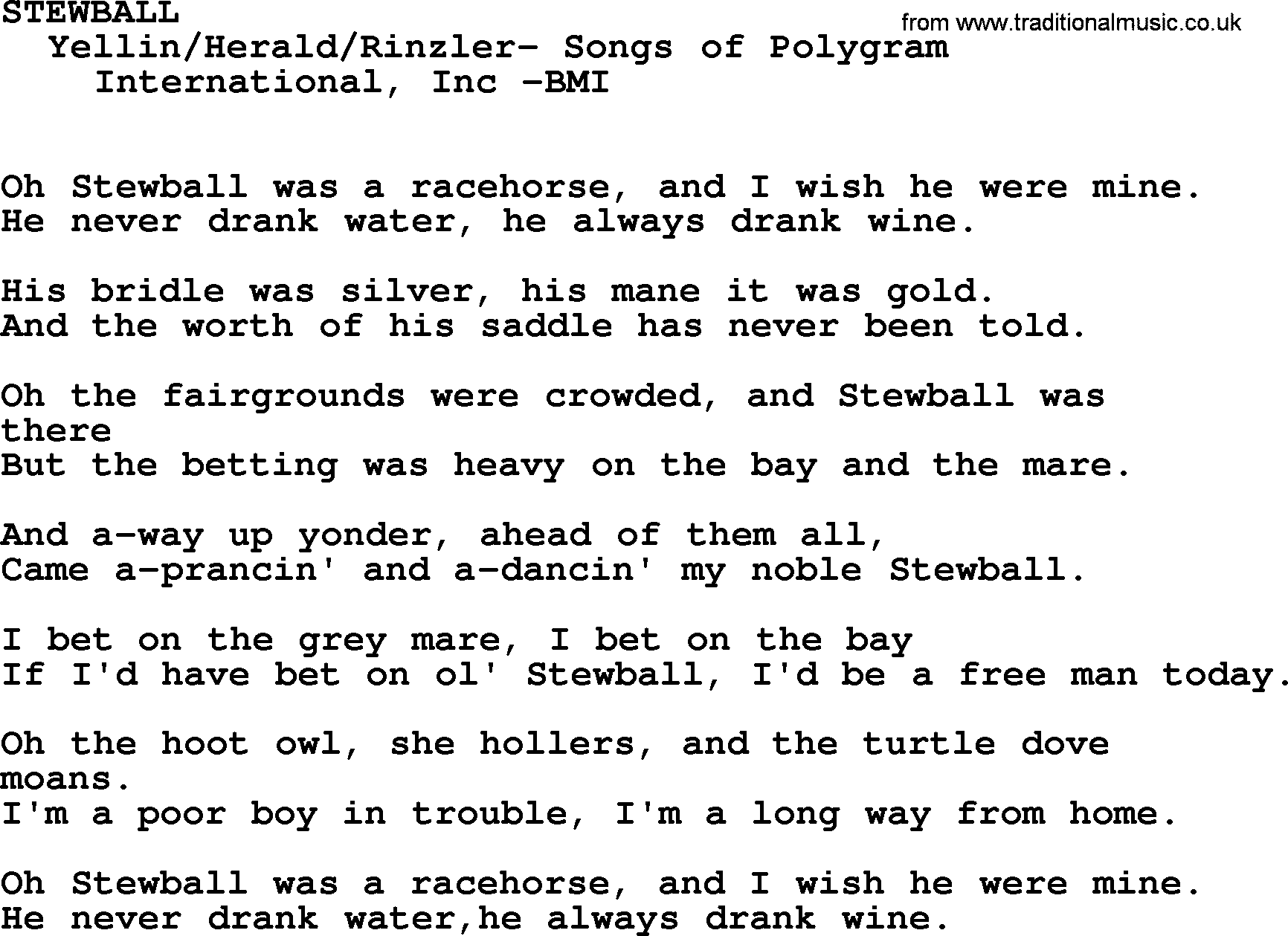
“Oh, Stewball was a racehorse, and I wish he were mine
He never drank water, he always drank wine”
Songwriters: John Herald, Robert A. Yellin, Ralph C. Rinzle
(There are 5 or 6 OTHER Stewball the Racehorse songs, dating back many years, by various artists and all with different lyrics, but this was the most well-known version, and the one I had in mind while writing.)

R70652181164ecf86f8be772e463cfad7


“because he wanted to let Troy know that he knew that Troy went back and got the saw.”
“How would you know if I circled back for the circular saw unless you yourself circled back for the circular saw?”


Beckinsale & Cusack & the gloves:

Sammy in the Summer of ’59

vsvcr2s

Wayne Michael DeHart   (May, 1996)

CRACK !!

The sound of a Louisville Slugger ripping the crap out of a grass-stained official Novice League baseball was followed quickly by loud, anxious shouts aimed in his direction. Not so much from spectators in the bleachers because there were only 17 spectators and no bleachers, but rather from his teammates on the field and on the team’s far-off wooden bench. But no voice was louder or more urgent than that of his coach, who began running alongside the first base line like a lynx in heat.

Aghast at the velocity of the line drive as it sizzled its way toward the right field corner, the other guys on his team knew trouble was a-coming, and at a high rate of speed.

They were just one out away from their biggest win of the summer (okay, their first win of the summer) and were clinging to a one-run lead with two outs and two runners on base. The Novice League, made up of 9-11 yr.-olds who were deemed “not ready” at the annual Little League tryouts, played 5-inning games and this was the bottom of the 5th so you see it was a somewhat significant situation within that limited environment.

Sammy had been placed in right field for reasons known to all red-blooded Americans of the late 1950’s familiar with the intricacies and traditions of the game of baseball.

Right field, it was said, was for losers.

Right field was for weaklings who wore thick glasses and couldn’t catch a cold.

Right field meant his chances of screwing up the outcome of the game would be minimized because most good hitters batted right-handed and had yet to learn the fine art of hitting to the opposite field. The not-so-good hitters, well, they often DID hit to the opposite field but only because they swung the bat so late or so slowly that even if contact was made, it was made after three-quarters of the ball had passed them by and the result was a ball that dribbled a few feet in any of several directions, sometimes even onto the playing field. Rarely did they get it to the outfield, and on those occasions the batter was often so happy and surprised that he was likely still at home plate yelling “I hit it! , I hit it!” when he was thrown out at first base, even by the worst of Novice League outfielders – like Sammy.

With any luck, on any given day, there would be a strong wind blowing from right-to-left at game time and fly balls would drift harmlessly into center field. Alas, on this day, unfortunately, the air was still but it would not have mattered anyway, because this ball was a screaming, vicious, missile that would have sliced through the strongest of gales as it surged defiantly toward the depths of the right field corner. It was smashed, I tell you. Whizzed. Scorched. Flaming fast and fading further and further to Sammy’s left as it traveled. To the trepidation of he and his teammates, this ball was absolutely not going to find its way into center field.

Center field, you see, was for winners.

Center field was for cool guys – athletic kids (or, in the case of the Novice League, semi-almost-athletic kids). Guys who could run faster than right-fielders, guys who were destined to get the girls the right-fielders couldn’t, wouldn’t, shouldn’t, when they got to high school. More importantly, at most levels, they could catch a baseball, hit a baseball and even throw a baseball all the way back into the infield.

Center fielders drank milk, ate vegetables and could spit almost 10 feet if they wanted to. Their uniforms and caps fit better, and they weren’t scared of nuthin’. In short, they were destined to have life by the baseballs.

Back to Sammy and a Saturday in the Summer of ‘59.”

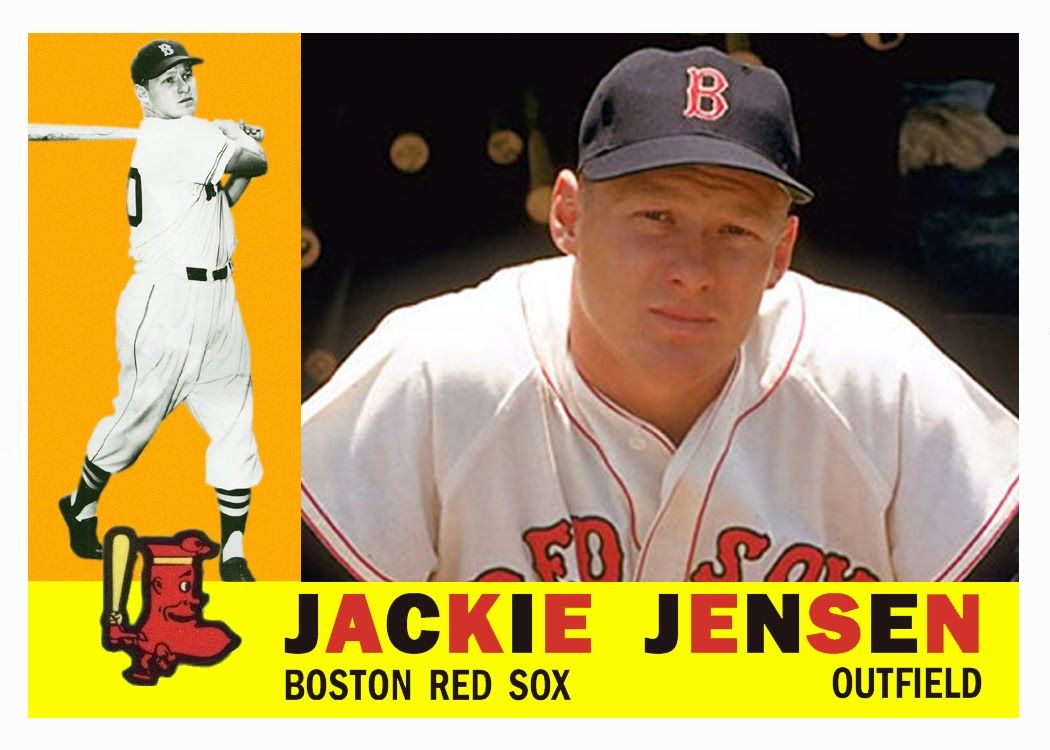
To the utter amazement of his teammates, he was running, really running, at full stride into the corner near the right-field line, his glove outstretched, looking for all the world like Jackie Jensen, the Red Sox right-fielder he revered, racing into the very same corner at Fenway Park to save a game against the demonic Yankees. He looked determined. He looked confident. He looked like – a center fielder!

The ball began to sink swiftly into the gaping jaws of that God-forsaken corner. All 17 spectators alternately shrieked and gasped as they watched the wonder of it all. The runners were circling the bases at breakneck speed. The setting sun tried its best to blind him, but his eyes remained steadfastly focused on the blurry sphere.

Sammy’s world hung in the balance.

He left his feet on a dead run and dove for that nasty bitch of a ball, still knowing deep inside he was not likely to catch it, being a right fielder and all. He closed his eyes as his belly bounced along the hard ground, like an airplane passenger might do during a rough landing. He came to a stop. The sounds from the spectators came to a stop. He expected his baseball career, if not his world, was about to do the same.

The brief moment of silence was obnoxiously eerie.

Then, cheers erupted from his teammates. The baserunners had stopped in their tracks, looking somber and subdued. His coach, who had also never stopped running, was now only feet away, hopping up and down like a rabid rabbit, celebrating the joy of life and baseball. The spectators made an array of sounds that, in the moment, just didn’t matter.

The boy had landed face down and hadn’t even felt the impact of the ball tearing into the webbing of his glove. He was looking back at his teammates who were going absolutely friggin’ nuts celebrating this greatest of all moments. It must have been the catch of the year in New Hampshire Novice League baseball, maybe even Little League baseball. He was a hero for sure, still lying face down but certain he would soon be lifted up and carried off the field. Hey, maybe the coach would even put him in center field for the next game!

Sammy reached into his glove for that battered but beautiful baseball so that he could hold it in the air for all to see before they carried him off the field.

It wasn’t there.

It had never been there.

“FOUL BALL”, proclaimed the umpire.

His coach retrieved the ball and happily ran it back in to the pitcher. The runners went back to their bases. His teammates got back into position. He got up slowly and trudged back to that spot from whence he came, head down, glory lost. He tugged on his cap, looked around, and muttered, “baseball sucks”.

Across America on that 27th day of June, 1959, hundreds of anonymous, pre-teen right fielders nodded in silent agreement, squinted in through thick glasses at the opposing batter, and prayed fervently that the next ball would be hit to center field.

Ah, sweet kinship!

#

  • Writer’s note: In the years to come, playing center field would be exalted in song by one John Fogerty in 1984 (“Centerfield”) and playing right field would be lamented in much the same way as it was when Sammy was 10, albeit this particular time with a significantly happier ending, by Mr. Willy Welch in 1982 (“Playing Right Field”, later sung by Peter, Paul & Mary).


Writer’s Note: ( March 29, 2021: )

I HAD to mention Jackie Jensen in this story that took place in June of 1959. He WAS the Red Sox right-fielder and had won the AL MVP award the year before, in the 1958 season. But there was a far more personal reason to acknowledge him in this story.

On Saturday, September 26th, 1959, Jensen hit his 28th home run of the season in the bottom of the 11th inning against the Washington Senators to win the next-to-last game of the season. The next morning, my parents, my brother, and I went to early Mass, then piled into the car for our first ever visit to Fenway Park. I was going to actually watch Jackie Jensen play, in person. It didn’t matter that both teams had losing records. As always after Mass, I picked up the Sunday paper from the guy in front of St. Joseph’s Church, and off we went.

In the back seat, I went right to the sports page to read about the game the day before and the “preview” to the game to be played that day. And, right out of the gate, just a couple of miles into the drive south to Boston, I was crushed. Just like that line drive to right field had been in the story. I think I muttered “baseball sucks” that day too.

As revealed in the newspaper story, Jackie Jensen had announced his retirement from baseball sometime in the early evening hours of Saturday, leaving the ultimate final baseball play – a walk-off home run, as his legacy. He was scheduled to drive home to California Sunday morning. So he was leaving Boston as I would be arriving. CRAP times 100.

If the reader thought Sammy had a rough day on June 27, 1959, it should be stated that he was facing a far worse day exactly three months later, on September 27, 1959. The special day he had been looking forward to for months had been hiJACKed by his own hero. “Who retires with one game to go?”, I’m sure I wailed a few dozen times on the way down. Nevertheless, it was the Red Sox, and Fenway Park, and it was still very special when we got to the game. Coming out of the tunnel and seeing that still-green September grass and The Wall in person for the first time was a sight I will never forget. Jackie Jensen was on his way home, and here I was, a fellow right-fielder, sitting at Fenway and rooting for his Red Sox.

Gene Stephens played right for the Sox in the game and they finished the season with a 6-2 win, led by, get this, my BROTHER’s favorite Sox player at the time, Don Buddin, who he got to see hit a 3-run homer. I also got to see Ted Williams play in person that day, and he got a couple of hits.

Sammy eventually got over the non-catch, and I eventually got over missing watching Jackie Jensen play baseball by one day. Life, it seems, really does go on.

(Jensen twice made short, unsuccessful attempts at a comeback after skipping the 1960 season. Likely he regretted it over the years. He died prematurely from a heart attack in 1982 at the young age of 55. RIP, my boyhood hero …)

83eeb3b2b3fba6a8dd92f225500b7ea8


March 15th at Mary’s Motel

vsvcr2s

Wayne Michael DeHart   (February, 2021)

Mary’s Motel is a lackluster, lemon chiffon 11-unit bargain basement lodging establishment that sits at the edge of a small, stagnant pond on the west end of Sundown Road, known to the locals in Sharonsburg, Maryland, as “Roman Road” – because the only way tourists find it is if they are roamin’ around looking for a place to snap photographs they can show to friends back home.

The wooden structure was built in 1978-79 by two brothers who had been damage controlmen in the Navy.

Though Mary’s name graces the property, it has always been run by a Dick.

Richard “Dick” Cesar Marlon was born on November 12th, 1951, in Lewiston Maine. Over his father’s objections (“You been messin’ around with one of them foreigners down in Portland?”), his mother, Margaret, had given him that unusual middle name after watching the actor Cesar Romero, Jr., play a character named “Pretty Willie” in the 1950 movie “Love That Brute”. She really did think Romero was the prettiest man she had ever seen and often called the young boy by his middle name when her husband was nowhere around. Unfortunately (or not), her husband Mark, a brutal spouse, ceased to be around at all after exiting solid ground while riding a horse on a “cowboy vacation trip”, whatever the hell that was, to Cody, Wyoming, with his buddies in October of 1955.

About a week after the guys headed west, Margaret got a call from one of his drunken friends, known around Lewiston as “Crazy Charlie”. He was excitedly slurring his words but she had learned over time how to understand him and his message was deemed to be of major importance. Mark the Monster had “gotten all lickered up” and rode a horse off a cliff and “got broken up real bad”, and Charlie left the image right there. Long pause. “Charlie, is he dead?” “Of course he’s dead, woman, he rode a horse over a cliff.” Margaret told him to hold the line while she composed herself and he said “okay, but hurry up ‘cuz the guys are payin’ for this call”.

She set the phone down and walked into the kitchen, where her sister Val was making brownies. She blurted out the news and then took some deep breaths and played with her hair. She returned to the phone and said she had one more question, and then he could hang up because she would call the authorities in Cody the next day for more information. “Go ahead, ask”, said Charlie. “How’s the horse?” The phone slammed down hard on the other end, but Margaret was quite sure she heard “something-something-bitch” before being cut off. She went back to the kitchen where Val was now sitting down at the table. Their eyes met and Margaret smiled and then Val smiled and said “ Welllll, shit” and both started laughing like fools.

Sis cautioned that Mark may have put Charlie up to a sick prank, since no one had properly notified her as next of kin. “We’ll know for sure when I call out there in the morning.” After a few moments of silence, the ladies grabbed some Cokes, pulled the brownies from the oven, and toasted the cruel bastard.

The next day, some sort of “spokesperson” for the Cody Police Department came on the line and said he was sorry to inform her that a man identified by his companions as one Mark Marlon, 33, of Lewiston, Maine, husband of Margaret Marlon, had indeed fallen to his death the day before while erratically riding a horse named “Soothsayer” at breakneck speed along a ridge overlooking the Shoshone River Canyon outside of town. He then extended the obligatory heartfelt sympathies to the newly-minted widow and asked her if she had any questions. She asked if she had to go to Wyoming to claim his body, but was told his friends were making arrangements to bring the body home. “No hurry” she said. She then asked, “How’s the horse?” “Ma’am, the horse went off a cliff with your husband on his back, a man who was all lickered up and acting crazy. Many people in this town knew and loved ol’ Soothsayer and are mourning his passing. Your husband, quite frankly, not so much.” Margaret said she understood and extended her own heartfelt sympathies for the town’s loss and the conversation abruptly ended.

His death confirmed, Margaret Mary Marlon hugged her two young sons, and told them gently that Daddy had an accident and had gone to live with God (she almost choked on those last five words, but it was the right thing to do at the time). Conducting herself with dignity and grace in their presence, she refrained from calling young Richard “Cesar” that day as a sort of parting nod to the man who had, to his only redeeming credit, provided her these two fine boys. Val came by to take the kids for a few hours, and Margaret went and sat on her living room couch and turned on the radio. Fats Domino’s “Ain’t That A Shame” rang out across the room. She cranked up the volume and let the sweet irony of the timing and the words sink in.

Suddenly, she was on her feet and doing the 1955 version of the Happy Dance. Ding, Dong, the sonofabitch was gone. No more physical or verbal abuse. No more vicious insults. No more threats. No more bruises to explain to the neighbors. When she said her prayers that night, she asked God to forgive her for her joy in the passing of one of His children, and she knew He would. She also said a prayer for poor Soothsayer and thanked him for giving his life for others. Her final prayer was that she would be able to get through the funeral and the immediate days thereafter without betraying her inner urge to smile like the Madwoman of Chaillot from beginning to end. And she did – not the smiling part, but the getting through part.

(Writer’s Note: It is suggested, if time allows, that the reader watch the YouTube video of “Goodbye Earl” by the artists formerly known as The Dixie Chicks for a 1999 perspective on Margaret’s irreverent response to Mark’s passing. Link provided at end of story.)

Dick Marlon’s younger brother, Joseph Jerome, shared his November 12th birthday, born on that date in 1953. Dick and Joe, two years apart, grew up with no real memories of their deservedly-dishonored dad. When they were in their early teens, Margaret married a man that reminded her of a young Cesar Romero, though not as pretty of course. She had kept her late husband’s surname, not wanting the boys to carry a different last name than her, even though she previously pondered going back to her maiden name (Atherton), Her new husband was well-to-do Bangor businessman Marcus J. B. Mead – making her Margaret Mead. No relation to that “other” Margaret Mead, she’d tell the women at the Ladies Guild meetings, and they would all smile at that, though few got the joke.

Margaret Mary Atherton Marlon Mead died unexpectedly and undeservedly from a ruptured brain aneurysm at the tender age of 43 in the summer of 1969, shortly after Joe graduated from high school. Dick had struggled through school but managed to get his diploma on time with the class of ‘67 and was kicking around at a dead-end construction job in nearby Auburn while waiting for the local draft board to get him. (Some said Marcus Mead had “influenced” the members to bypass him each month, while others believed that, even with the manpower demands of the war, they simply didn’t want to embarrass Lewiston.) Both boys took her passing hard, as they had felt close to and respected their mom. They liked Lewiston and they liked their stepdad but decided it was time to go, and joined the Navy together that Fall. They never came back. To Maine, that is.

After seeing the world and leaving the Navy, they both settled down in Allegany County, Maryland, a location they chose completely at random one night after hooking back up when they resumed civilian life. Dick later admitted “at random” meant using the pin-the-tail-on-the-donkey approach to a mid-Atlantic map hoping the dart would land much closer to Washington, D.C., rather than on the far western edge of the map. Joe wanted a do-over but Dick reminded him that there had to be a reason for the wayward toss. Joe ceded to his older brother and was glad he did when he met the love of his young life there just months after arrival.

Her name was Mary Portia Mathews, and she was his Angel of the Morning.

Dick and Joe built the small motel together, mostly using trust fund proceeds they had claimed upon reaching age 21 (Marcus and Margaret had planned well for the boys), and Mary, in her off-hours from her bakery job, contributed endless energy, sweat and humor to the endeavor in the “go-fer girl” role she chose and embraced. The brothers had planned to name it “Margaret’s Motel” in honor of the only Margaret Mead that mattered to them.

On the morning of March 15th, 1979, with completion of the project just weeks away, Mary Portia’s ‘75 Chevy Monza was struck head-on by a car whose driver was “all lickered up”, just as Joe’s father had been that day in Wyoming. She died instantly. To say that Joe was grief-stricken comes up short. He was devastated. Despondent. Distressed.

He asked Dick if it would be okay to change the paperwork and the unprocessed sign order for the motel to read “Mary’s Motel”, as she had poured her own heart and soul into making their dream become a reality. Joe told his brother that their mother would have wanted it that way, because she was who she was, and Dick unhesitatingly concurred. After Mary’s funeral, the name change was formalized, and plans for the opening were finalized.

When the red & green neon sign arrived, it was attached to double posts that straddled the roof above the office. That night it was lit up for the first time and Joe completely lost it. Dick tried to console him, reminding him that visitors for years to come would speak of their stay at Mary’s place, and her name and her spirit would be ever present. By the time Joe prepared to go home to the apartment he had been sharing with Mary, he had calmed down and even gave his brother a thumbs-up as he drove out of the motel parking lot.

As he reached the road, and just before Dick turned back toward the office, Joe suddenly threw his Chevy C10 into reverse and slowly backed up to the office door, where he got out and hugged Dick, something the brothers rarely had done. Dick could hear Joe sobbing, feel him shaking, but said nothing, and just held the hug. After what seemed like minutes, but was probably not, Joe looked up at the sign and literally shrieked, “Yeah, Mary, this IS your place”. The outburst and its guttural tone was unsettling to Dick. Joe released the hug, firmly shook Dick’s hand while looking away, and gave him one of those familiar arm punches they had exchanged so often as they were growing up, though this one was much harder, reflecting the adrenaline rush he was surely feeling. Then he slowly turned, got back in his truck, and drove off again, this time not looking back.

The call from the sheriff’s office came shortly after midnight. Dick never blinked. He knew Joe had a shotgun, thus he wasn’t surprised. No note was left. That scream, that prolonged hug, the tender spot on his arm – he understood. The only thing that really surprised him was finding a diamond ring in a small box in a bag behind the driver’s seat in the truck. The receipt was dated March 12th, three days before Mary met her fate. Joe had always told him everything, and he knew an engagement was somewhere on the horizon, yet finding the ring that way didn’t sit well for some inexplicable reason. Dick felt anger and hostility – toward Joe, toward life, toward everyone and everything he saw and heard and touched. It was at that moment that Richard Cesar Marlon fully and forever morphed into Mark Marlon’s spawn.

He asked himself why Joe had not given the ring to Mary right away. She would have known that moment of bliss before she had no more moments. She would probably have looked at it a dozen times as she drove to work the morning of March 15th. Waiting stole her chance for one last glance at her left hand on the steering wheel, and the smile that would have come with it, The next day, however, he told himself that Joe was probably afraid that Dick might unintentionally spill the beans to Mary about the ring, and that was why he didn’t tell him about buying it. He also chose to believe that Joe was likely waiting for Opening Day at the motel, or the night before, to propose since that was going to be a special time for all three of them. With that, he was no longer angry with Joe – but the rest of the world was still on his shit list. The sudden deaths of his mother, his brother and his future sister-in-law had blackened his soul and his mood.

Unlike Joe, Dick had not really made any friends at all in Maryland. Even before these new tragedies, he was a different breed of cat. As time had passed, he had already begun to show warning signs that despite not remembering much about his father, he was his father’s son. Joe, on the other hand, was the more mature and responsible of the two and was one of those guys everyone liked immediately. Mary actually met Dick first in Sharonsburg, at the bakery, and he was the one who introduced her to Joe.

At 27, Dick had never been in any kind of significant relationship. A Navy “psych” had suggested that relationships might always be difficult for him because he took the loss of his mother so hard and had subconsciously thrown up protective walls whenever he was attracted to a woman. But that did not explain not dating in high school at all or in the immediate years thereafter. He was attracted to girls back then, and now to women, but he always felt judged by them and kept his distance. He admitted to himself that he was attracted to Mary at the bakery that day and that he felt some degree of jealousy when she and Joe connected instantly.

Away from work at the motel, Joe had spent less and less time with Dick, and while Mary often suggested double dating and hooking Dick up with one of her Cumberland friends, Joe cautioned her against it, without saying why. He cared about his brother and would have been thrilled to see him find a special lady, yet he had seen some dark changes in Dick since they moved to Maryland. Their mother had shared with them some of her “experiences “ with their father when they got old enough to understand, and while Dick just shrugged it off, Joe had aligned with the feelings of the people of Cody, mourning the horse and damning the man. Despite their overall closeness, on those occasions when their father’s name came up, the tension was evident – one was a Hatfield and the other was a McCoy.

Joe was buried in the same small Maryland cemetery as Mary, a decision that did not sit well with Marcus Mead, who insisted that Joe would have wanted to be buried in the family plot in Lewiston, next to his mother. (Mark Marlon had been buried in his own family’s section of an Augusta cemetery and in recent years, Dick questioned why his father and mother were not buried together, even after his mother had told him about the sins of his father. Margaret had made clear to her sister soon after Mark’s passing that she did not want to be laid to rest anywhere near him, for the things he had done to her.)

After they were married, no-siblings Marcus bought a burial plot that could accommodate up to eight decedents – he and Margaret, the two boys and their future spouses, and Val and her partner. At the time of Joe’s passing, only Margaret had taken her place there, and Marcus was adamant that Joe join her. Dick had not told Marcus, or even Mary’s family or friends, about the ring. So even though Joe had loved his mother dearly, he almost surely would have chosen to stay forever with Mary in Maryland. Had he left a note, he could have included that detail, along with a reference to planning to ask Mary to marry him, so everyone would know. Marcus would probably have honored that wish, but there was no note, and Marcus did not know how serious the Joe-Mary relationship had been. Thus, burying him out there irked the man who had created the significant trust funds that not only built the motel, but provided the brothers with more than generous living expenses in the interim. Marcus and Val traveled to Sharonsburg for Joe’s funeral, and even though the motel had not officially opened yet, Dick offered them rooms there and they accepted out of respect for Joe.

Before leaving for home, Marcus asked Dick about the sign. “I thought I was funding “Margaret’s Motel” in honor of your mother. Did Joe ask for the name change? If so, I get it. But now that he’s gone, I’m willing to pay for a new sign and business papers to change it back.”

Dick, somewhat slow-witted and one who was often unprepared for the unexpected, had already thought this matter through, and was ready with the best answer imaginable; “I appreciate the financial offer, but there are two good reasons for keeping the name as it is, and one of them should make you feel better about this. First, Mom’s middle name was Mary, though it didn’t seem to come up very much. So, in effect, the motel is still named for her, right?” Marcus nodded and asked for the second reason. It was only then that Dick told him about finding the ring and how Joe had asked for the name change when Mary Portia died, and that Joe had specifically said that his mother would have wanted it that way because that’s who she was, and he (Dick) had agreed.

The response completely changed Marcus’ viewpoint and when he told Val about it as she packed her things, she cried. The good kind of crying. She had often called her sister by her middle name when they were young because “Margaret” sounded so stodgy, but when Mark Marlon came into her life, he controlled damn near everything she said and did, and got heated if someone called her Mary ( “Went out with a Mary once, said I was a slob or something like that.”) just as he did later whenever he was reminded his first son’s middle name was Cesar. People have first names for a reason, he asserted, and that was that. It also happened that Mark Marlon had no middle name, not even an initial, and to him that served as proof that middle names were irrelevant and “not worth speakin’ about”.

Dick’s superlative and calm explanation regarding the name change, and the resulting acquiescence of Marcus and approval of Val, suggests that in April of 1979, Richard Cesar Marlon may have stepped away from the abyss, and let some light into his life.

After a few last-minute delays, “Mary’s Motel” officially opened for customers on Saturday, April 28th, 1979, with nine of the eleven rooms rented. Dick served as manager and maintenance man, and a local woman worked part-time as bookkeeper, receptionist in Dick’s absence, and because she displayed a contagious and constant smile, became the face of the business. She had emigrated from Greece, as reflected in her given name, Clio. Her expressive dark eyes sparkled and she talked with her hands. Now on her own, she was divorced with no children. Over the years, Dick and Clio developed a close friendship that led them to get married twenty years later, though neither ever expressed feelings of love for one another. They had simply become comfortable confidantes who got tired of living alone as they approached age 50. There was no proposal, just a “we might as well get married” agreement over meatball subs in Frostburg.

For those first twenty years, Dick had worked hard and suppressed his dark Mark Marlon side. He started drinking heavily, but gradually, over that time span and while it bothered Clio, he seemed otherwise stable and “safe”, so she made the commitment. Marcus Mead had come out two or three times a year for the first ten years or so after the motel opened, but he developed health issues and retired, rarely traveling even down to Boston any more to see his beloved Red Sox play. Val moved in with him as his caretaker and companion, but there was no funny business involved. One or both would call the motel now and then in the 90’s to speak to whoever answered the phone, but that was the extent of the contact. Dick and Clio got married on the motel lawn with only a few locals attending, all at Clio’s request. Brunch was ham sandwiches and chocolate cream pie and then see ya later.

After the wedding, however, business at the motel dropped off significantly as Dick sloughed off his duties and building and grounds maintenance noticeably suffered. The pond was emitting a foul odor and there were always dozens of beer cans floating around. Kids would park across the street from the motel and drink and make out there. By 2008, with the economy flailing and failing, the drinkers had become druggies, income was scarce and Dick ordered Clio out to get any kind of employment she could find. She bounced down a road of temporary part-time minimum wage jobs, hating them all. Her glorious smile had become a vacant stare and she was finally openly rebelling against his antics, which enraged him. Then came the abuse, the insults, the bruises. She called Marcus regularly for moral support (they had met soon after she started working there and he thought she was potentially the best thing that could happen to Dick – if he didn’t screw it up.).

She didn’t leave because she had no place to go. She considered the office at the motel her safe space and kept a cot there, and even when all the rooms were vacant, she pretended she had to be there because there were rumors some people might be coming. Dick sat around their shabby apartment outside of town and cursed his wife and his life. Marcus had told Clio the details of Mark Marlon’s death in Wyoming back in ‘55 and on bad nights she would ask someone above to send Dick to Cody so the descendants there could exact their revenge for the loss of Soothsayer.

By early 2021, Marcus Mead and Val were long since dead and buried next to Margaret.
Dick was now 70 with severe cirrhosis and a fat gut that hung below his belt. The ramshackle motel was a local joke, yet still considered open much of the time. Clio had “escaped”, taken away by a nice couple from Richmond who spent a night at the property when they essentially got lost while roamin’ around and exploring the countryside. Dick reported her missing but the local cops only pretended to look into it. Clio had, in fact, reported to them that she was living safely now “far away” and they wished her well and never made a record of the call. Dick is sure she ran off with some foreigner to be a maid or a cook, and good riddance to her.

Before Marcus died, he contacted an associate in Boston in March of 2001, and that associate sent one of his men up to Lewiston. The two men talked for the better part of three days, and the man left with a significant deposit for future services. Marcus asked that the man create a “calling card” identifying himself as Marcus Junius Brutus, which he told the man was his real full name “back in the old country”, showing him his “J.B.” middle initials on an ID card, noting that he added the American surname Mead because he “liked the nectar on occasion”. He told him about Mary’s Motel in Sharonsburg, Maryland, how to get there, and he described the man who ran the place. He told him that a woman named Clio might contact him some day after his own passing and ask for a favor, and she would know how to get the balance of the payment to the man.

In the here and now, Clio placed the call to Boston on February 26th.

There is a better than even chance that on March 15th, at Mary’s Motel, Richard Cesar Marlon, a real-life Dick, will be disrespecting the memory of his mother, his brother, the young love of that brother’s life, and the Lady Clio by sitting soulless and heartless on a filthy couch midst the crumbling premises, his only company his own misery. He will not be riding a horse, but will surely be “all lickered up” and oblivious to things that go bump in the night.

Beware, Cesar, ‘tis the Ides of March, and Brutus draws near … slight not the one called Soothsayer.

###


Cesar Romero, Jr. as “Pretty Willie” in “Love That Brute”


In Gnames and Ledgens

vsvcr2s

Wayne Michael DeHart    ( May, 2020 )

Nothing of note happened in the valley town of Gnames on October 10, 1961.

But thirty miles west, at the fancy new hospital in Delfeye ¹, a liberated little girl was delivered into the world by Hephera “Heffie” Drillings and Zachary “Zeus” Drillings. In truth, a doctor delivered the kid – Heffie just pushed when she was told to. Her dazed hubby sweated whiskey and water droplets onto his faded t-shirt, while murmuring unintelligible gibberish in a manner that seemed to calm his wife and amuse the young doctor.

Heffie had wanted the tiny creature to be a girl that would be named “Effie” because she was sure they would look alike and sound alike, while and Zeus favored a boy who would be named “Hercules,”  because he’d grow up strong and tough like his old man, but each was dismissed by the other from the get-go, and any chance for agreement spiraled downhill from there. They agreed there was plenty of time, and there was – until there wasn’t.

Heffie was a twice-divorced, seasoned 33 year-old. Five years her junior, Zachary was immature, undisciplined and indecisive. She met him at a produce stand on a hot July afternoon and was immediately enamored with his big biceps, country charm and childlike naivete. For his part, he liked that Heffie was an experienced older woman with well-rounded assets. She was a typist and he was a laborer. (She was his “type” and he put her in “labor”, he told Lou the barber.) Though very different, they complemented and complimented one another, compromised often, and somehow kept their knot tied tight.

The attending nurse said they needed a name, now, for the birth certificate.“We’re still thinkin’”, revealed Zachary. Now three years into their marriage, Hephera had heard this refrain one too many times: at the used furniture store, in the concessions line at the Hesiod Hills Drive-In Theater, and the order window at Bacchus Burgers. After subtly sizing up the nurse, however, the new mom carped the diem.

“ZZ”, she offered,“this nurse is so pretty and I bet she’s smart too, like our little girl’s gonna be. I bet ya she can whip up a name that sounds real good, right Missy?”. The woman in white was indeed intelligent and well-read, and had a thing for Greek mythology, which was about to become unexpectedly relevant.

“Mr. Drillings, why did she call you ZZ?”, she asked, grabbing and holding his attention. “Ma’am, because of that Zeus guy that shoots lightning bolts and bosses people around and has statues and stuff. I’d do that if I could. Got no middle name, and I liked the zing of ZZ. Top-notch ring to it, It was a toss-up between Zeus and Zorro, whose show I like, but the guys at work would razz me if I picked a cape-wearing guy in a mask over a bolt-throwin’ beast, so I’m Zachary Zeus and proud of it, ma’am.”

The Nurse’s face lit up like a blowtorch in heat upon hearing his colorful explanation. Her own father had a fixation with Zeus! Diabolically delighted, she suggested the name of a beautiful woman that Zachary’s idol had tasked a friend to mold to perfection in every way. Zeus at first gifted her to everyone on earth, who all happened to be men at the time (“Wowza”, thought Heffie, imagining the possibilities). After tantalizing those guys for 317 days, she was given by Zeus to a feckless, fortunate fellow named Epimetheus, whose brother “Pro” had done something or other to capture Zeus’ attention. “Must have been something really good to fire up my man Zeus”, declared ZZ. The devilish Nurse was clearly on the scenic route to Hades now, but she couldn’t help herself.

She ventured onward, portraying the woman as flawless – a walking work of art who instilled in mankind feelings of endless joy and brotherhood, conjured up images of sunlit nights and double rainbows, and provided orchards of fruit and rivers of mead to all. Each of these blessings she bestowed by simply, and unselfishly, opening a beautiful box she kept hidden under her bed. A wide-eyed ZZ exclaimed “Yes, yes, we’ll take it.” Heffie cautioned “Slow down, cowboy, you haven’t even heard it yet.” Both waited impatiently as The Nurse, milking the moment, playfully simulated a drum roll.

“Pandora! You could call her Panny or Dora for short. It’s perfect, please tell me you like it?” ²

Pandora Drillings? This was all Greek to her, but sure, why not, mused Heffie, briefly distracted by a passing orderly. She and Zachary made eye contact and signaled a muted but mutual approval.

In need of a middle name as well, they asked for help again and Nurse Missy tossed in “Daphne”, a gorgeous water nymph whose suitors, including the Olympian God Apollo, rested on her laurels, whatever that meant. ZZ looked riled and swore that “No daughter of mine‘s gonna be a nympho!” She laughed and reassured him. “No ‘o’ there at the end, ZZ. Daphne was pure as morning dew.”  The new dad, relieved, came back with “Lordy, gotta admit I do like me some good, clean dew at dawn.” A ready-to-wrap-this-up Heffie grunted “Don’t mind him none, he don’t know no better. Go ahead and write it down.” Zachary poked back with a boisterous chant of “DAFF-NEE, DAFF-NEE”.

And so it was that Pandora Daphne Drillings became a person of record, thanks to the fanciful and fertile mind of The Nurse, who wished them the best and left the room with a gleam in her eye and a bounce in her step.

Growing up in Gnames, Pandora was proving to be charming, resourceful and inquisitive, though burdened with a manipulative and volatile temperament. She thoroughly researched the origins of her name before asking her folks if they knew who Pandora really was. Heffie regaled in telling the story of Nurse Missy describing an inspiring, celebrated, benevolent woman providing presents for all from a mysterious box back in the day.

But the disapproving girl in turn told them the story of a vengeful (or just irresponsibly curious, depending on the source) Greek Eve who opened up a big ol’ JAR of Nasty on the Earth, unleashing a myriad of misery on mankind. A spiteful icon of wicked intent, or simply an impulsive, irresponsible idol? In closing the jar, she had trapped Hope inside. Was her intent to suppress Hope, or rather to preserve Hope? The answers matter not; the result was the same. The deed was done, the damage lived on. The Drillings girl would forever be averse to a curse from a nurse.

Feeling played and betrayed, Heffie bounced a thick index finger off her husband’s forehead. “I TOLD you we should have gone with “Effie.” Flinching, ZZ said it was likely only an honest storytellin’ mistake and told his daughter to just stay away from magic boxes and don’t release bad things into the air and she’d be okay. “Easy for you to say, Dad, you’re not the one who has to put up with all the dirty comments from the boys at school. It was A JAR, dammit.” He tried to console her with “Hey, it’ll make you stronger, girl, make you tough inside. Zeus tough.” (She left the room, wondering what “zoo stuff” was.)

He was right though. Strong and determined she proved to be, pleasing to the eye, and at age 21, while working at Phycshun Plastics, she moved with a girlfriend to Ledgens, ‘bout halfway between Gnames and Delfeye. There she met one Apollo Augustus “Gus” Grissom, age 20, adopted at birth by Mr. and Mrs. Al Grissom. Born in the same hospital as Pandora. Delivered by the same laid-back doctor. Given his name by the same person …

Athena Grissom, a/k/a Mrs. Al Grissom, a/k/a “Missy the Nurse”.

Athena’s obsession with Greek mythology was inherited, her own name springing from her father’s head in tribute to Zeus and his daughter. This child-in-waiting was thus going to be an Apollo or an Aphrodite come hell or high water, and Al, as he did most of the time, simply and safely concurred. When a boy finally emerged out of the darkness with a triumphant victory cry, her cup did indeed runneth over. “Welcome to the Light, Apollo!”, she gushed in her dual roles as the attending nurse and adoptive mother. Hearing this, the doctor excused himself, and went to get a Snickers bar, which seemed acutely appropriate.

Al was a happy warrior as well, because Athena had begrudgingly thrown him a bone with the Roman middle name that could be shortened to Gus and thus be a namesake to the famous Mercury Seven astronaut Gus Grissom. Mom called the little guy Apollo. Dad called him Gus. Most people just called him “Paul-o”. He was well-liked, though generally excuse-laden and ill-prepared. Labeled “artsy” and imaginative, he was boyishly good-looking.  One green-eyed young lady ga-ga’ed over him, but he never seemed to notice. His mind drifted on clouds. (More Wordsworth’s than Shelley’s.)

After high school, he went to Titan Tech in Thalia on a music scholarship for a semester, dropped out, and came back home to Ledgens. His paternal grandfather had set up a very hefty trust fund for him, with annual distributions starting at 21, balance due at 30. Good thing, as he wasn’t particularly ambitious or career-driven. Worked for Al, his florist father, at “Grissom’s Geraniums et Al”. Made deliveries. Played the cello and wrote poetry. Lived in the back with a green-eyed cat named Stella. (Not to be confused with the green-eyed MIss ga-ga, who was named Stefani.)

Hephera often told Panny that she should hang out at the Gnames produce stand in the summer so she could find her own ZZ. “No thanks, Ma. No offense, Dad.”, she’d say. Whoosh! Sailed right over ZZ’s head every time.

A delivery van pulled up to a pre-Valentine’s Day party on Saturday, February 12, 1983. The youthful driver stepped out, yellow roses in hand, and sauntered to the front door. Pandora answered his rhythmic knock. She had ordered the flowers for her roomie and wanted to be the one to give them to her. He was having none of it. “Nope. No can do, Missy.” Missy? Uh-oh.

The pair of nurse-named saplings each had one fist around the flowers and two eyes on each other. Party-goer Ernie Eros broke up the stare-down by suddenly nailing an unsuspecting Apollo with a plastic arrow right in what Forrest Gump would later describe as his “butt-talks”. When he looked back at Panny, he surprisingly went ga-ga for her. He had been a ga-ga-ee, yes, but this was his first time ever as the ga-ga-er.  Well, dang, he thought, as the light bulb over his head blinked on and off. He suddenly felt bad for ignoring the green-eyed girl.  Meanwhile, Pandora got whacked with an arrow too, but hers just bounced wildly off her chest, giving her a bad vibe and nothing more.

The dude stepped in front of her. “Name’s Zeke.” “Mine’s, er, Dora.” He smiled. She didn’t. “No, I’m messin’ with ya, my real name is Apollo, like Apollo Creed in them Rocky movies, except I don’t box or nothin’ like that.” Damnnnnn, she thought, when she heard him say “box.” What are the odds, right? “Dora’s short for Pandora, like the lady with the box, except it was really a jar. Pandora Daphne Drillings. Pleased to meet you.” (She wasn’t.)

Blatantly bewitched by Eros’ arrow and Pandora’s eyes, and wanting to immediately impress her, he blurted out that in a few months he was going to start getting lots more money than other guys his age, and her ears perked up like they had been caffeinated. Pickin’s were slim for young women in these parts, so she had to play this right.

In the next few months, everything fell neatly into place for her. Both shared the stories behind their unique names. He joked that the nurse that named her must be “as loony as my mother.” Pandora didn’t really like any of his names, but to her surprise, he liked saying “Daphne” and stayed with it. She alternated between Augustus and Gus, the lesser evils, depending on her mood.

Unable to sleep one humid June night, Panny recalled the story of her mythic forename bearer and her unheralded husband. She tried to make “Epimetheus” roll off her tongue, to no avail. The shortened “Theus” sounded noble and masculine (she had ruled out “Meth” for some reason) so she relentlessly called him that for a week and he cringed every time she did. “Theus, hon.” “Theus, babe.” Jeez, enough already.

“I work with flowers, I’m just not a Theus, Daph, that’s more fittin’ for an ironworker or a welder. How about just Eppy?” Her eyes rolled back in her head. “Eppy”? You seriously want me to call you Eppy? “Oh, make love to me, Eppy”, “Let’s go to the park, Eppy” (they were IN the park at the time), or heaven forbid “Mom, Dad, this is Eppy, we just got engaged.” She calmed herself, then said “No way. You’re Theus. It’s settled. I’m going across the street to Bud’s Market. Make sure Eppy isn’t here when I get back.”

They sat silently together on a park bench as she broke him off a piece of her Kit Kat bar as a goodwill gesture. It didn’t work. Discouraged, he dutifully kissed her on the nose, got up, and headed for his van, leaving her alone and brooding. She cussed. Fumed. Seethed. Simmered. Smoldered. To let off steam, Pandora even boxed her own ears. (Whoa!) But all the while, she kept her eye on the prize – his trust fund.

Almost five months into this rocky relationship, deep into engagement and marriage discussions, it was undeniable that Daphne had degenerated into an intransigent and intolerant sorceress. She had become distant, mean-spirited, irritable, sarcastic, unpredictable, uncompromising and controlling in a way that was hard for Apollo to process. (To be fair, though, she did have perfect skin and nice nails, so there was that.)

It was almost as if she didn’t even like him, much less love him. Alas, an airtight, affable, amiable alliance was now awry, askew, ajar. (“It was A JAR, dammit!”)

Nevertheless, the pair struggled on. She kept calling him Theus just to burn his toast, and he would remind her it was Eppy paying for her ice cream. Meanwhile, their cuddlin’ time had become nothing more than fleeting cheek-pecks and one-arm hugs.

Though Pandora was in the process of loosening the lid of her own stockpile of searing lightning bolts, she suggested their parents meet in the park in Ledgens. Maybe if it went well, she and Theus could take that positive energy and get their soon-to-be-prosperous relationship back on track. He held out hope, yet feared Daphne was a simmering volcano, ready to erupt. The reason eluded him, but the tension did not.

A week later, in an idyllic setting right out of Camelot – chirping birds, clear blue sky, grass green and groomed, a picnic table somehow free of chirping-bird droppings – both parties of three approached the table from different directions, arriving at almost the same moment. It was Saturday, August 20, 1983. “Every Breath You Take” was Billboard’s #1. For an awkward few moments, breaths, deep ones, were all anyone could muster. The silence roared through the warm, lazy air.

When everyone started to speak at once, resulting in a garbled word stew, the ice was broken. There were smiles and a couple of chuckles. Each family sat down on their own side of the table, father facing father, mother facing mother, Dora facing dollar signs. Al stepped up. “Hey folks, how y’all doin’? Good to finally meet Daphne’s family.”

And with that, the awkward silence was back. At least on the Drillings’ side of the table. Panny grimaced. Eppy grinned. Though they had spent time with each other’s parents on several occasions, the Grissoms only knew Pandora as Daphne and the Drillings only knew Apollo as Augustus and Gus.

Zachary pumped his fist and let out a quick round of “DAFF-NEE, DAFF-NEE”. He had no idea why Al had called her by a middle name never used at home, and he didn’t really care. However, now that they were seated knee to knee, Hephera and Athena were able to focus on each other’s facial features. Both woman leaned in further for a closer look. Neither blinked. Each felt the leading edge of a deja vu cold front nipping at their nostrils.

The Nurse had long since forgotten the middle name  part of her presentation two decades earlier.  She had  tossed “Daphne” at the Drillings on a whim because that was Apollo’s first crush ( Apollo the Greek God, that is, not Apollo her American son, despite both eventually crushing on a Daphne who didn’t really want them.)  When Athena got home from work that day long ago, she told Al all about duping two unsuspecting strangers into naming their daughter Pandora, but she never mentioned the second act of her play. So even when their son introduced this beguiling, intriguing lass to them as Daphne, it was deemed to be a case of superb serendipity, yet it didn’t come close to ringing a bell for Athena.

Until today. In the park. Knee to knee with Mrs. D.

Heffie had turned to her daughter. “Daphne”? Panny, are you going by your middle name now?” The girl stammered and looked toward her Epimetheus, who volunteered to Heffie that he called her Daphne because he didn’t really like Dora. Athena quipped, “Daphne, Panny, Dora … how many names you got, girl?” Cognizance came a-callin’ when she heard the distinct inner echo of her own words – “Panny, Dora” – running together.

And that’s when the bell rang.

She turned to a weathered but suddenly-familiar Zachary. He, along with Heffie and Athena herself, had remained unnamed because Al’s opening mention of Daphne had derailed the introductions train before it even left the station. “And your name is …?” “Zachary Zeus Drillings, ma’am, but people call me ZZ ” Suddenly, Athena wished she was in Athens and I don’t mean Ohio. Twenty years is like two weeks when one hears a guy call himself ZZ. She didn’t remember Heffie’s own unusual first name but she saw in the face of this now 50-ish woman some bad karma coming down the road. Typing the name Pandora Daphne Drillings while filling out maternity ward paperwork had been merely a funny filling & filing fling for The Nurse, who had her fingerprints all over the occasion, in more ways than one. But now she could sense that the chicken, or at least the chicken’s momma, was coming home to roost.

Still, it appeared only Athena had figured it out. ZZ and Al were comparing hands and exchanging good-natured banter. (That’s what happens when a career laborer and a career florist spread their fingers out on a picnic table.)

Heffie volunteered that she and ZZ thought Gus was a nice young man who was treating her daughter with respect. “Gus?” repeated Athena. (“Gus Grissom, ya know, ZZ”, said Al, proudly, but sadly. “Astronaut. Died in the Apollo 1 fire. I said one hell of a coincidence, but the wife says it’s one of those foreign kismet things. Whatever, it broke the boy up some, he was only four ya know.” ZZ was lost in space on this one, but figured he was safe with his go-to “Bummer, man.” response.)

Athena, knowing she was likely poking the bear, politely told Heffie she preferred her son be called by his rightful name. “I understand completely,” came back Heffie. “I’m the same way, so let me correct myself. Augustus is a fine young man, and seems quite well-suited for Pandora.”

“Augustus? Rightful name? Like Daphne?” Athena rose to her feet, aware now that dark clouds were rolling in. “Who’s Pandora?” asked Al, still staring at his hands. Athena bit off the words “It’s Apollo’s girlfriend, dear, it’s Daphne.” Heffie and ZZ looked at each other and in unison asked, “Who’s Apollo?” In the verbal chaos that ensued, a barrage of questions were asked and answered, but the two young people kept silent.

Eventually, Athena acknowledged that she had been guilty of “a bit of mischief” at the Drillings’ expense all those years ago, and tendered a decidedly insincere apology to them and to the girl, all the time thinking to herself, “You just had to call me ‘Missy’, didn’t you, lady?” An irked Pandora told her boyfriend that he was right – his mother was indeed loony. Athena pouted on hearing that, while Heffie snickered and ZZ made loon sounds to the best of his ability.

Pandora abruptly stood up and announced that she and her guy were going for a walk. “C’mon, Theus, now, and don’t you dare bring Eppy with you.” She had been expecting a proposal later that day, and she wanted it on her own terms. She hustled him away to a chorus of “Who’s Theus?’’ and “Who’s Eppy ?” Al chimed in with, “Who’s on first?”

Pandora worried that her marriage/divorce/alimony plan was slipping away. Once out of view, she warmly kissed the cello fellow, her beau-with-a-bow, hoping to reach a high note and a rousing finale. She said she was so sorry for letting her petty, pent-up hostility diminish and distract from her otherwise full jar of positive attributes. She told him she would call him whatever name he wanted from that point forward, because, you know, what’s in a name and all. Followed by, “But not Eppy, of course, and honestly, that whole Augustus/Gus thing is kind of lame, Paul-o rings hollow, Zeke is a geek, and c’mon, Apollo IS loony. So are we okay now, Theus?”

Eppy nodded. He leaned forward and whispered softly into her ear, “It’s time.” He stepped back and double-tapped the bulge in his shirt pocket. She watched his movements through dancing eyes. He gently placed the box in her left hand, and told her not to open it.

Then, Apollo Augustus “Gus” Grissom winked, turned and, for the second and last time in that park, walked away from her.

It was Saturday. He had flowers to deliver and a cat to feed.

Shaken, she held, and beheld, the velvet-covered case in her hand. Her curiosity was tempered with caution, her resolve offset by uncertainty, her indignation fueled by fear.

Fate in hand, pausing, hesitating, clutching what was now Pandora’s box . . suddenly, Pandora balks!

An eternity passed. She lifted the lid slowly, warily. Out flew Hope, escaping eons of captivity, emerging into an elusive earthly existence. Behind it, Pandora’s box sat hopeless and empty, devoid of marriage dreams and treasure schemes. The ring was gone, Apollo was gone and she was woebegone.

Though the book was forever closed that day on Theus and Eppy and a certain fabled catastrophic container, Pandora Daphne Drillings remains a person of record in Gnames and Ledgens  in the year 1993.  A sad person as it turns out, living with her mom, Heffie, in a house surrounded by laurel trees down by the Orontes River, which flows through the outskirts of both towns. ZZ, sadly, had blown his top when a drunk said something bad about Pandora, beat the man into a pile of pulp, and was sentenced to 17 years in the slammer. Apollo Augustus Grissom went on to play the cello with the Louisiana Philharmonic Orchestra. He lives in New Orleans, enjoying his inheritance with an aging Stella and a mysterious young woman with a tattoo of Pandora’s box, and the words, “It’s a JAR!”, on her butt-talks that he paid for. He regularly sends photos of himself in thousand-dollar suits to his mother, and reminds her that he has hope every day, pleasing the hell out of The Nurse, a.k.a. “Missy.”

And just last week, over in Delfeye, in a hospital room, a maternity nurse, days away from retirement, welcomed a request from an indecisive young couple. She was telling and selling them a compelling story of a mythical goddess, blending the names and qualities of a loving mother, Hera, and her robust, drop-dead handsome son Hephaestus, the husband of Aphrodite, his very loving and faithful wife. (Al was gonna love this one.)

As she simulated a drum roll, ZZ Top’s “Sharp Dressed Man” played in her head.

“Hephera! You could call her “Heffie”, for short. It’s perfect, please tell me you like it?” ³

#

*******
*******
*******

Writer’s Note #1

Delphi was an important ancient Greek religious sanctuary sacred to the god Apollo. Located on Mt. Parnassus near the Gulf of Corinth, …” – World History Encyclopedia
(Should I tell these guys that Apollo thinks they spelled Delfeye wrong? Guess he didn’t get no good book-learnin’ there at Titan Tech before he dropped out, leaving the distraught young ga-ga lady, Stefani, behind. Alas, word is she lost hope and went off the deep end in 1997. She survived, but word is she’s still  . . .  far from the sha-sha-shallow now.)

*******

Writer’s Note #2:


 Oh, the Circle of Life!

“There she met one Apollo Augustus “Gus” Grissom, age 20, adopted at birth by Mr. and Mrs. Al Grissom. Born in the same hospital as Pandora. Delivered by the same laid-back doctor. Given his name by the same person …

Athena Grissom, a/k/a Mrs. Al Grissom, a/k/a “Missy the Nurse”. 

“Both shared the stories behind their unique names. He joked that the nurse that named her must be “as loony as my mother.”

Yes, Apollo, she sure was!

Footnote ²  → “Pandora! You could call her Panny, or Dora, for short. It’s perfect, please tell me you like it?” 
Footnote³ → “Hephera! You could call her “Heffie”, for short. It’s perfect, please tell me you like it?”

*******

Writer’s Note #3

She: “Wayne, good story, but . . . did you realize that you spelled Legends wrong in the title? No big deal, but you might wanta change that.”

Me: “You didn’t read the story, did you?”

She: “Ummm, gotta run. Have a great day.”

#

Hermes, on behalf of Zeus, giving Pandora to Epimetheus, while Eros looks on, with his magic arrow   – Fedor Iwanowitsch

Pandora   – Nicolas Regnier

pandora

Apollo and Daphne    – Gian Lorenzo Bernini
Apollo-and-Daphne-by-Bernini

Pandora and husband Epimetheus    – Paolo Farinati
Epimetheus and pandora - Paulo Forinati


“… and I liked the zing of ZZ. Top-notch ring to it, “
“As she simulated a drum roll, ZZ Top’s “Sharp Dressed Man” played in her head.”

ZZ Top – Sharp Dressed Man (Live) – YouTube